Introduction
Automotive component procurement relies heavily on reliable die‑casting service to deliver structural and cosmetic parts for passenger and new‑energy vehicles. Buyers frequently receive widely divergent pricing when sending identical 2D drawings and 3D models to multiple casting suppliers. Superficial unit‑price comparison will hide hidden downstream risks for automotive projects. Many purchasing teams focus only on immediate cost figures and overlook tooling ownership, secondary operations, and quality compliance embedded inside each quotation.
Each automotive die‑casting quote is built upon unique assumptions about alloy grade, cycle time, expected scrap ratio, and post‑processing scope. Suppliers may omit CNC machining, leak testing, or surface finishing to show a lower headline price. Total landed cost over the full production program determines real project profitability instead of one‑off unit pricing. Automotive grade traceability and delivery stability must be weighed equally alongside direct manufacturing expenses during supplier evaluation.
What Hidden Cost Items Are Often Missing From Automotive Die‑Casting Quotations?

Many automotive die‑casting suppliers submit simplified quotations that only cover raw casting output without detailing auxiliary manufacturing links. Purchasers must cross‑check every line item against RFQ requirements for secondary machining and quality verification before side‑by‑side comparison. Unlisted post‑processing work will trigger unexpected budget increases after formal order placement. Even well‑prepared drawing packages cannot eliminate assumptions made by different foundries, and ambiguous terms will create commercial disputes during mass production.
Tooling amortization: Some suppliers spread die investment across part price while others charge tooling as one‑time standalone expenditure.
Post‑processing scope: Deburring, CNC milling, blasting and coating may be excluded from basic casting unit pricing.
Quality testing fees: Pressure leakage test, X‑ray porosity inspection and material certification reports can incur extra charges.
Logistics & compliance: Packaging, export documentation and freight expenses are sometimes omitted from initial bidding documents.
😐 Hidden omitted scope is the primary trigger for automotive die‑casting project budget overruns.
How Do We Judge Whether Die‑Casting Quotation Matches Automotive Component Requirements?
Technical alignment forms the core standard for valid automotive die‑casting quote evaluation beyond simple price sorting. Buyers should verify quoted alloy specification and achievable tolerance against original drawing specifications for safety‑critical auto parts. A low‑cost bid becomes worthless if the supplier cannot satisfy automotive grade mechanical performance standards. Different foundries deploy different tonnage die‑casting machines and quality‑control workflows, which directly shape achievable part performance and long‑term yield stability.
Material specification check: Confirm quoted aluminum or magnesium alloy matches drawing grade and automotive material standard.
Dimensional tolerance review: Verify whether quoted capability meets GD&T requirements on safety‑relevant automotive structures.
Process matching assessment: Confirm high‑pressure die‑casting, vacuum assist or alternative casting route fits component functional demands.
Yield expectation validation: Request documented baseline scrap rate for similar automotive parts from each bidding manufacturer.
🔍 Technical requirement matching takes priority over pure unit‑price comparison for automotive die‑casting procurement.
How to Calculate Real Total Program Cost for Automotive Die‑Casting Projects?
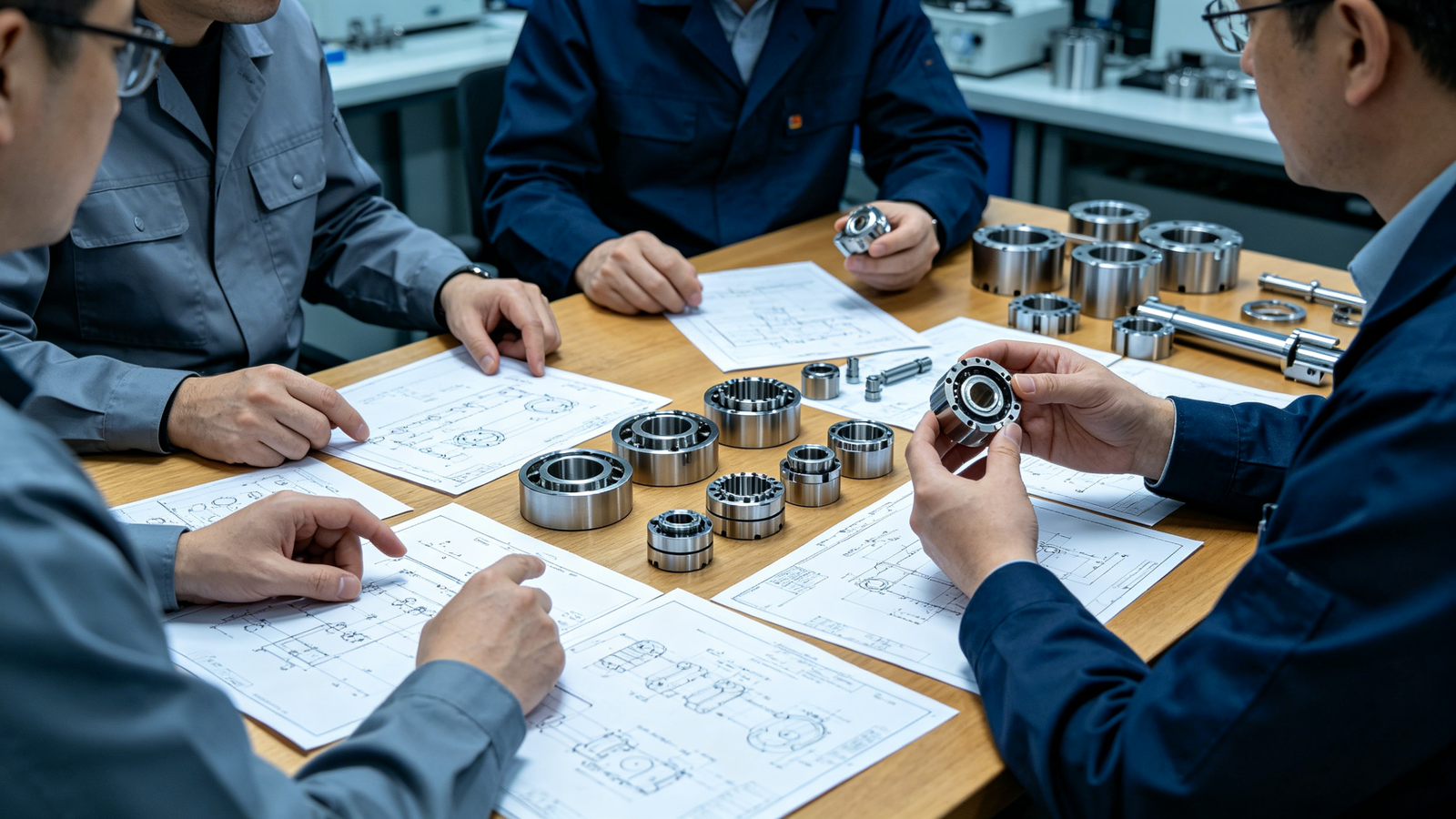
Real program cost aggregates one‑time tooling investment, per‑unit production expenditure, post‑processing expense, expected scrap loss and recurring inspection workload across the full order volume. Buyers should avoid evaluating quotations only on single‑piece price without considering total projected order quantity. Total landed cost over full program lifecycle reflects genuine commercial value for automotive die‑casting sourcing. Variations in die lifespan, maintenance terms and minimum order quantity will further shift cumulative expenditure throughout serial production cycles.
One‑time tooling expense: Sum die design, manufacturing, trial‑run modification and initial sampling costs for the project.
Per‑unit manufacturing cost: Combine raw alloy material, die‑casting cycle expense, trimming and basic part handling expenditure.
Secondary operation outlay: Calculate CNC machining, surface treatment, testing and certification cost applied to every finished unit.
Risk contingency provision: Budget for expected scrap, die maintenance and potential rework during automotive mass production phases.
📊 Lifecycle total‑cost calculation prevents misleading decisions driven by artificially low piece‑price quotations.
Automotive Die‑Casting Quotation Dimension Comparison Table
| Evaluation Dimension | Supplier A | Supplier B | Supplier C | Supplier D |
|---|---|---|---|---|
| Tooling Charge Mode | One‑time payment | Amortized into parts | Partial prepayment | Tooling free with MOQ |
| Included Post‑Processing | Casting only | Casting + deburr | Casting + CNC + blasting | Full finished‑part delivery |
| Automotive Test Deliverables | No formal report | Basic dimension report | X‑ray + leak‑test report | Full PPAP documentation |
| Quoted Die Lifespan | 50 000 shots | 80 000 shots | 100 000 shots | 120 000 shots |
If you need assistance sorting your automotive die‑casting RFQ and benchmarking supplier offers, please contact us.
Practical Guidelines for Fair Automotive Die‑Casting Quote Comparison
Unified RFQ documentation lays the foundation to make automotive die‑casting supplier quotations truly comparable for purchasing teams. Every bidding manufacturer must receive identical 3D files, revision‑controlled 2D drawings, alloy standards, target yearly volume, post‑processing requirements and automotive‑level quality deliverable expectations. Consistent input requirements eliminate subjective assumptions that widen quotation gaps. Buyers should explicitly list deliverable documents, tool ownership rules and acceptance criteria inside request‑for‑quotation paperwork before distributing to foundry partners.
1.Unify RFQ input package: Distribute identical drawing revision, alloy specification, volume forecast and secondary‑operation requirements to all competing suppliers.
2.Mandate itemized cost breakdown: Require each bidder to separate tooling, casting, post‑processing, inspection and logistics inside formal quotations.
3.Align quality deliverable standards: Confirm whether PPAP, material certificates, X‑ray or leak‑test reports are included within quoted pricing.
4.Clarify tool‑related commercial terms: Confirm die ownership, die‑life guarantee, maintenance responsibility and tool‑transfer conditions for each proposal.
FAQ for Automotive Die‑Casting Quotation Sourcing
Q: What are the core advantages and key quality benchmarks of your automotive die‑casting service?
A: Our automotive die‑casting service supports typical tolerance up to ±0.12 mm for structural auto components, applying ISO/TS automotive‑oriented inspection workflows covering X‑ray porosity detection and pressure leakage testing. We deliver PPAP level‑3 documentation as standard for serial‑production orders, matching performance requirements for new‑energy vehicle housing and chassis components.
Q: We plan to procure automotive die‑casting parts, what documents do we need to submit for fast quotation feedback?
A: Please supply revision‑locked 2D engineering drawings, 3D STEP or IGES models, target annual or batch production volume, alloy grade specification, secondary‑operation requirements and automotive‑quality deliverable expectations. Send the complete RFQ package via our official channel, we provide initial technical assessment within 4 working hours and formal itemized quotation within 12 working hours, and free DFM feedback is available for automotive component projects.
Q: Regarding automotive die‑casting component procurement, what are the rules for minimum order quantity, lead‑time and payment terms for different order volumes?
A: Small‑batch trial production supports MOQ starting from 50 pieces for automotive die‑cast samples; serial‑volume orders above 500 pieces enjoy optimized unit‑price conditions. Standard tooling and sampling lead‑time ranges from 21‑28 working days, mass‑production cycle sits at 7‑14 working‑day window. We maintain flexible manufacturing capacity and support urgent‑order compression upon mutual commercial negotiation.
Q: After purchasing automotive die‑casting components, how will you handle issues such as dimensional non‑conformity, performance defects or delivery delays?
A: Incoming‑part quality inspection report serves as primary problem‑judging baseline. If supplier‑rooted quality non‑conformity is confirmed within 7 working days after goods receipt, we arrange rework, replacement or supplementary delivery within 48 working hours. Tooling investment carries guaranteed die‑shot lifespan, and formal supply contract defines liability clauses for delivery delay risks.
Q: Can you provide customized automotive die‑casting solutions for special vehicle operating‑condition requirements?
A: Customized process adaptation is supported for automotive die‑casting parts. Please provide detailed operating‑condition parameters including working temperature, load stress, sealing requirements and anti‑corrosion targets. Our engineering team outputs optimized DFM and casting‑process proposal within 3 working days, customized‑solution cost fluctuation normally falls within 5‑18 % compared with standard automotive die‑casting pricing.
Conclusion
Comparing automotive die‑casting quotations extends far beyond ranking simple unit‑price figures from competing foundry vendors. Procurement teams need to integrate tooling arrangement, post‑processing scope, automotive‑grade quality deliverables and full‑program total landed‑cost calculation during supplier evaluation. Unified RFQ specification and itemized bid breakdown are essential to filter misleading low‑price quotations with hidden omitted scope. Purchasers balance technical matching level, commercial transparency and production stability to select suitable die‑casting partners for long‑term automotive component projects.
For expert assistance in implementing for your production needs, visit our resource center or contact us. Let’s help you scale up your manufacturing with precision and efficiency!