Introduction

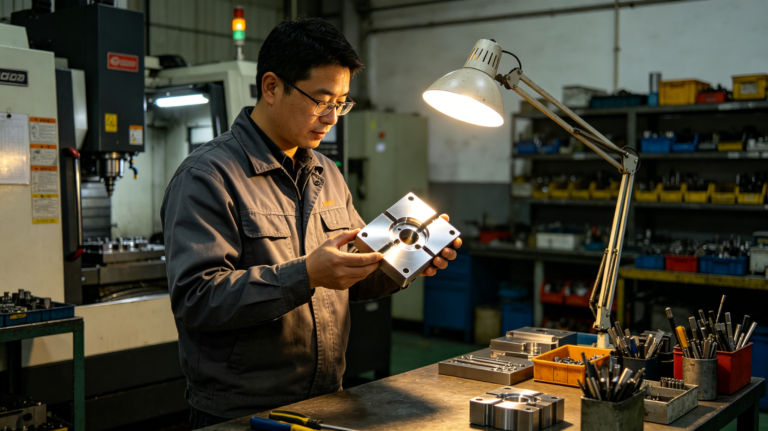
Automotive die castings are widely used in powertrain components, EV systems, transmission housings, electronic control housings, and structural parts. Their dimensional accuracy directly affects assembly clearance, sealing performance, connection strength, and system reliability. For automotive programs, dimensional variation is rarely caused by machining alone and can be influenced by alloy shrinkage, mold condition, die casting parameters, and cooling behavior. Consistent dimensional accuracy comes from controlling the entire die casting manufacturing system rather than relying only on final inspection.
If dimensional risks are not identified during new product development, mass production may result in insufficient machining allowance, shifted hole positions, unstable sealing surfaces, or assembly interference. From Xiamen RuiCheng’s perspective, automotive die casting projects should be evaluated across product structure, mold design, casting parameters, and inspection requirements. For automotive buyers, the ability to repeatedly achieve the same dimensional results is more important than simply producing one qualified sample.
Why Do Automotive Die Castings Develop Dimensional Variation?
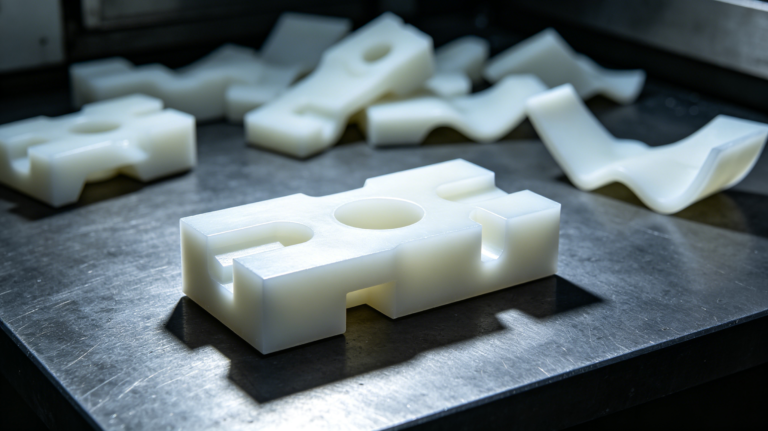
Dimensional variation in automotive die castings is commonly related to metal shrinkage, thermal deformation of the die, filling pressure, and residual stress after solidification. Complex thin-wall structures, deep cavities, ribs, and different wall thicknesses can cool and shrink at different rates, causing deviations from theoretical mold dimensions. At the same time, temperature, injection speed, and pressure variations in the die casting process can affect repeatability. If dimensional accuracy is controlled only through downstream CNC machining without addressing casting deformation and shrinkage, production cost and quality risks can increase significantly. Xiamen RuiCheng uses mold manufacturing and process validation to identify dimensional risks as early as possible.
Alloy Shrinkage: Aluminum alloys undergo volume changes during filling, solidification, and cooling, while different cooling rates can create local dimensional variation.
Die Thermal Deformation: Continuous production brings the die to a stable thermal condition, meaning production dimensions may differ from dimensions measured with a cold die.
Residual Stress: Thin walls, thick-to-thin transitions, and complex ribs can create uneven solidification and shrinkage, resulting in local distortion.
Ejection Effects: Uneven ejection forces can cause slight deformation, particularly in long, thin-wall, or geometrically asymmetric castings.
🔧 Automotive die casting dimensional variation is usually the combined result of material, mold, process, and product structure, so control must begin at the source.
How Can Alloy Selection and Mold Design Improve Dimensional Stability?
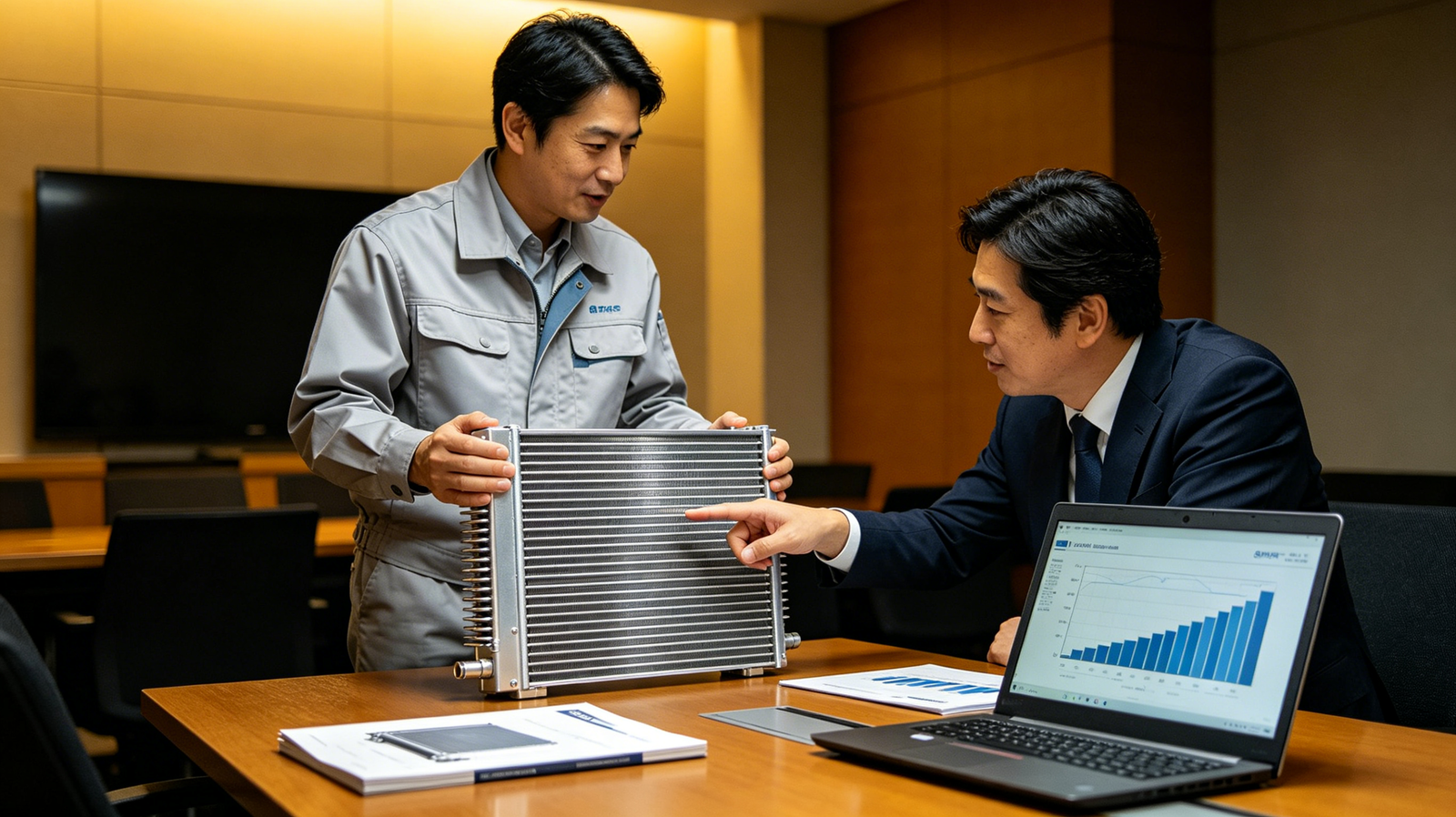
The automotive die casting process should begin with appropriate material selection and product structure because alloy fluidity, solidification shrinkage, and thermal expansion all affect final dimensions. For high-accuracy housings, brackets, and structural components, mold design must consider more than basic filling capability. Gate location, overflow design, venting, cooling, and ejection systems must work together to maintain dimensional stability. A production-ready mold should account for thermal balance and dimensional variation under actual mass-production conditions. Xiamen RuiCheng evaluates 3D models, critical dimensions, and application requirements during DFM analysis to identify potential dimensional risks.
Material Matching: Select an aluminum alloy system according to strength, corrosion resistance, fluidity, and dimensional stability requirements while controlling raw material variation.
Wall Thickness: Avoid unnecessary wall thickness transitions to reduce differences in solidification rates and shrinkage.
Gating and Venting: Proper gate, overflow, and venting design promotes stable filling and reduces localized casting defects.
Cooling System: Properly positioned cooling channels help high-heat areas reach a more stable thermal balance during production.
📐 Dimensional accuracy is not determined by mold machining precision alone; it depends on the combined effect of material, product structure, and mold thermal balance.
How Can Automotive Die Casting Maintain Dimensional Consistency in Mass Production?

The major challenge after T1 trials is maintaining dimensional consistency across different production batches, production times, and equipment conditions. Even when initial samples meet drawing requirements, dimensional drift can occur if injection speed, molten metal temperature, die temperature, or cooling conditions fluctuate. A defined process window should therefore be established, supported by CMM, gauges, and other inspection methods for critical dimensions. Stable mass-production dimensional control depends on process data rather than repeated parameter adjustments based only on operator experience.
Process Window: Define acceptable ranges for molten metal temperature, die temperature, injection speed, pressure, and other critical parameters.
First Article Inspection: Recheck critical dimensions after mold changes, material changes, or significant production-condition changes.
SPC Monitoring: Apply statistical process control to critical dimensions so trends can be identified before nonconforming parts become widespread.
Traceability: Link production parameters with inspection results so dimensional drift can be investigated quickly and systematically.
📊 A production-ready dimensional control system should make every significant dimensional change measurable and traceable.
Key Controls for Automotive Die Casting Dimensional Accuracy
| Control Area | Primary Impact | Typical Risk | Control Focus |
|---|---|---|---|
| Material | Shrinkage stability | Batch variation | Alloy composition control |
| Mold | Reference dimensions | Thermal deformation | Structure and cooling optimization |
| Process | Repeatability | Dimensional drift | Defined process window |
| Inspection | Quality verification | Missed variation | CMM and SPC integration |
If your automotive die casting project has critical dimensional, hole-position, or assembly requirements, Xiamen RuiCheng can evaluate the mold, casting process, and inspection system together to identify dimensional risks before mass production. contact us.
How Can a Complete Dimensional Validation System Be Built?
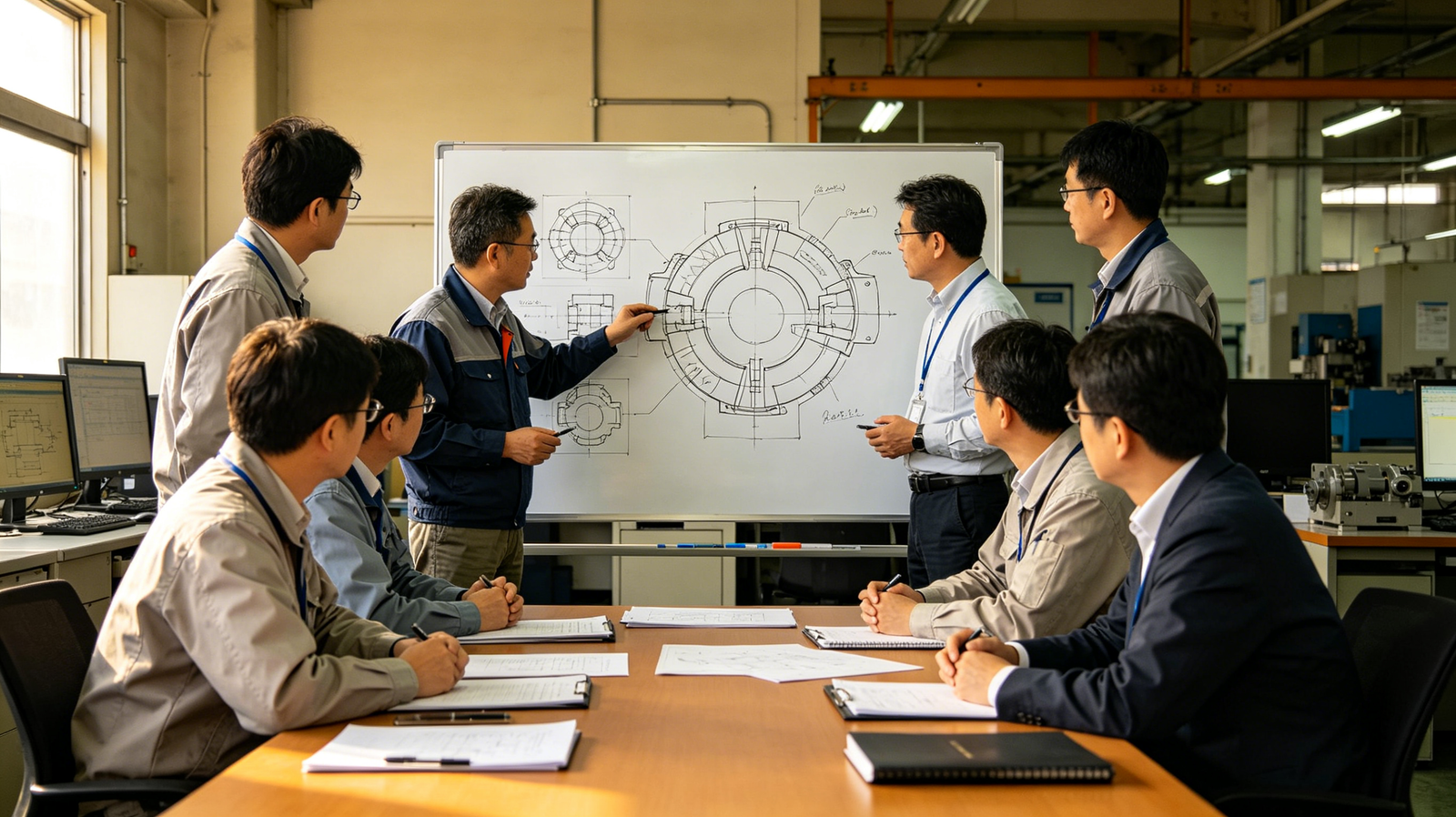
Dimensional control should not be limited to final inspection. It should cover product development, mold trials, first article approval, process monitoring, and mass-production audits. Automotive customers typically need more than confirmation that one sample meets the drawing; they need evidence showing how critical dimensions behave across continuous production. Connecting engineering validation with production data turns dimensional accuracy from a sample-level result into a repeatable manufacturing capability.
1.Drawing Datum Review: Identify critical dimensions, datum surfaces, hole positions, and assembly-related characteristics before tooling begins.
2.Mold Validation: Use trial production to evaluate the effects of shrinkage, deformation, and thermal balance on critical dimensions.
3.CMM Inspection: Use coordinate measuring machines for complex surfaces, positional tolerances, and multi-datum dimensional verification.
4.Production Monitoring: Apply SPC and process capability analysis to critical dimensions and identify dimensional trends during mass production.
Frequently Asked Questions
Question 1: What are the key dimensional accuracy standards for your automotive die castings?
Answer: Xiamen RuiCheng develops dimensional control plans based on customer drawings, tolerance requirements, assembly functions, and critical characteristics rather than applying one general tolerance to every feature. Critical dimensions can be verified through CMM, dedicated gauges, and production data, with SPC used to monitor dimensional trends during mass production.
Question 2: What information should we provide to receive a quotation for automotive die castings?
Answer: We recommend providing the 3D model, 2D engineering drawing, material requirements, annual volume, critical dimensional tolerances, surface treatment requirements, and any downstream CNC machining requirements. Xiamen RuiCheng uses this information to evaluate casting feasibility, mold design, machining allowance, inspection requirements, and the overall manufacturing solution.
Question 3: How do MOQ and delivery times vary by order volume?
Answer: Automotive die casting delivery schedules depend on mold development, trial production, sample validation, and the planned production volume, so a single fixed lead time should not be applied to every project. Prototype production, small-batch validation, and high-volume annual orders can be planned differently, with MOQ, lead time, and payment terms confirmed according to the product structure and order requirements.
Question 4: How do you handle dimensional deviations during mass production?
Answer: Xiamen RuiCheng first reviews sample dimensions, production batches, mold condition, and casting parameters, then compares the abnormal data with historical inspection records. After identifying the root cause, corrective actions may include process adjustment, mold modification, or downstream machining optimization, with the improvement incorporated into the production control plan.
Question 5: Can you provide customized solutions for demanding automotive dimensional requirements?
Answer: Yes. Xiamen RuiCheng can develop customized die casting solutions based on product structure, critical dimensions, tolerances, assembly requirements, and annual production volume. Support can include DFM analysis, mold development, die casting, CMM inspection, CNC machining, and mass-production quality control. Early engineering evaluation helps reduce the risk of late-stage mold modifications and production quality problems.
Conclusion
Dimensional accuracy in automotive die casting is a system-level manufacturing challenge involving alloy shrinkage, mold thermal balance, casting parameters, ejection deformation, and dimensional inspection. For companies developing automotive components, supplier selection should go beyond equipment size, quotation, and one-time sample dimensions. The more valuable die casting supplier is the one that can identify dimensional risks before mass production and continuously control process variation after production starts. From mold development and die casting to CNC machining and inspection, Xiamen RuiCheng provides integrated manufacturing support for automotive component programs.
For expert assistance in implementing automotive die casting production needs, visit our resource center or contact us. Let’s help you scale up your manufacturing with precision and efficiency!