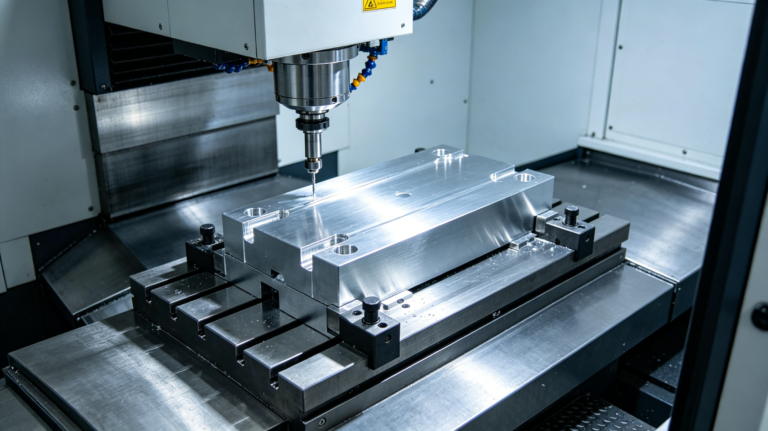
6061 or 7075 aluminum: which machines better for complex milled housings?
Introduction
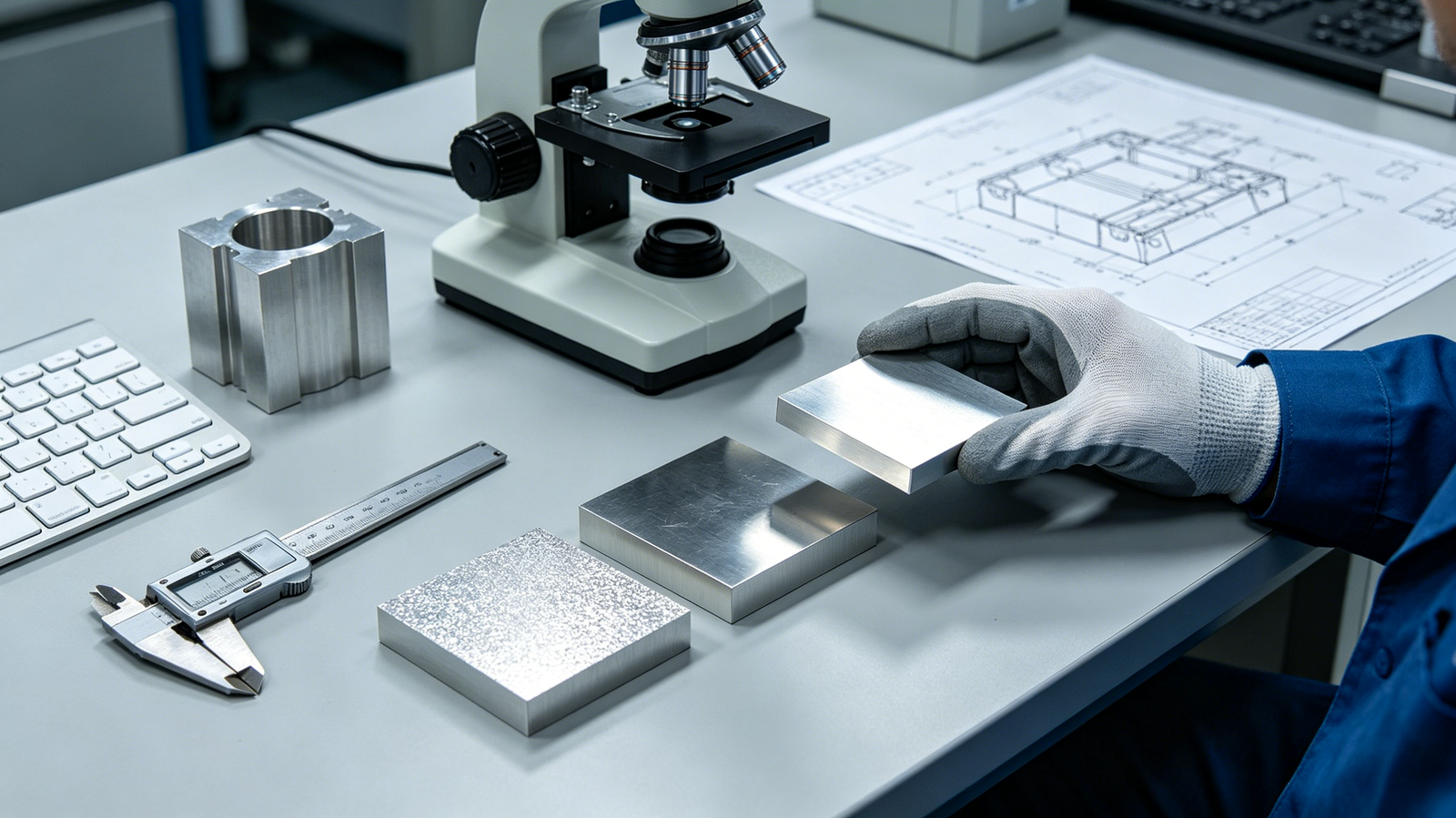
Choosing between 6061 and 7075 for a complex milled housing looks like a strength question and usually turns out to be a stability question. 7075 is substantially stronger and harder, which makes it the obvious answer on a specification sheet, but the same properties that make it attractive also make thin walls move, tools wear faster and anodising less predictable. The alloy that survives the drawing is rarely the alloy that survives the cutter, and on a housing with deep pockets, thin ribs and a sealed face, distortion after machining costs more than the extra yield strength ever buys. This article is about choosing on manufacturability rather than on a datasheet.
At Ruicheng Industrial Design Co., Ltd., where 5-axis milling, reverse engineering and CMM inspection sit under one ISO 9001 workflow, this decision is usually made at the quotation stage by looking at the wall thickness, the datum structure and the finishing route together. The point is not that one alloy is better; it is that the two alloys fail in different ways, and a buyer who knows which failure mode their part invites can specify the right temper, the right stress-relief step and the right inspection point before any metal is cut. The three questions below cover what actually changes, how each alloy behaves through thin sections, and which one holds tolerance and finish on a real housing.
What actually changes between 6061 and 7075 on a complex housing?

The datasheet comparison starts and ends with strength: 7075-T6 is roughly twice the yield strength of 6061-T6, and that single fact drives most alloy choices on paper. What the datasheet does not show is that the zinc-rich 7075 work hardens differently, carries higher residual stress from the mill, and is considerably less forgiving when a deep pocket leaves a thin wall between the cutter and open air. On a housing, the decisive variable is not how much load the finished part can carry but how much the blank moves while you are trying to make it. A stronger alloy that warps out of the tolerance band after the third setup is a more expensive choice than a weaker one that stays put.
Strength versus machinability: 7075 cuts with a higher cutting force and a more abrasive chip, which raises insert wear and heat input on long finishing passes, while 6061 machines freely, holds a better as-milled finish at a given feed and is noticeably kinder to thin walls and small tools.
Residual stress in the blank: Both alloys arrive with rolling and quenching stresses, but 7075 releases them more dramatically when material is removed asymmetrically, so a housing pocketed from one side can banana after unclamping unless the roughing is staged with an intermediate stress-relief or a rest period.
Corrosion and surface treatment: 6061 anodises to a uniform, predictable cosmetic finish, whereas 7075’s zinc and copper content tends to produce a darker, more variable anodic layer and is more susceptible to stress corrosion in certain tempers, which matters if the housing is exposed or cosmetic.
Cost and availability: 6061 is broadly stocked in plate, bar and extrusion at short lead times, while 7075 in the specific thickness and temper a housing needs can carry a longer lead and a material premium that is easy to overlook when only the machining hours are compared.
A buyer can narrow this quickly by reviewing how a supplier guarantees tight-tolerance work on similar geometries and how they verify capability through first-article reports when a part moves between setups. Both documents reveal whether the shop plans for stress release or simply discovers it at inspection. It is also worth checking the inspection route used for the final datum structure, since a housing measured while still clamped can pass and then fail on the assembly bench.
🔧 Choose on how the blank behaves under the cutter, not on the strength line of the datasheet.
How does each alloy behave through thin walls and deep pockets?
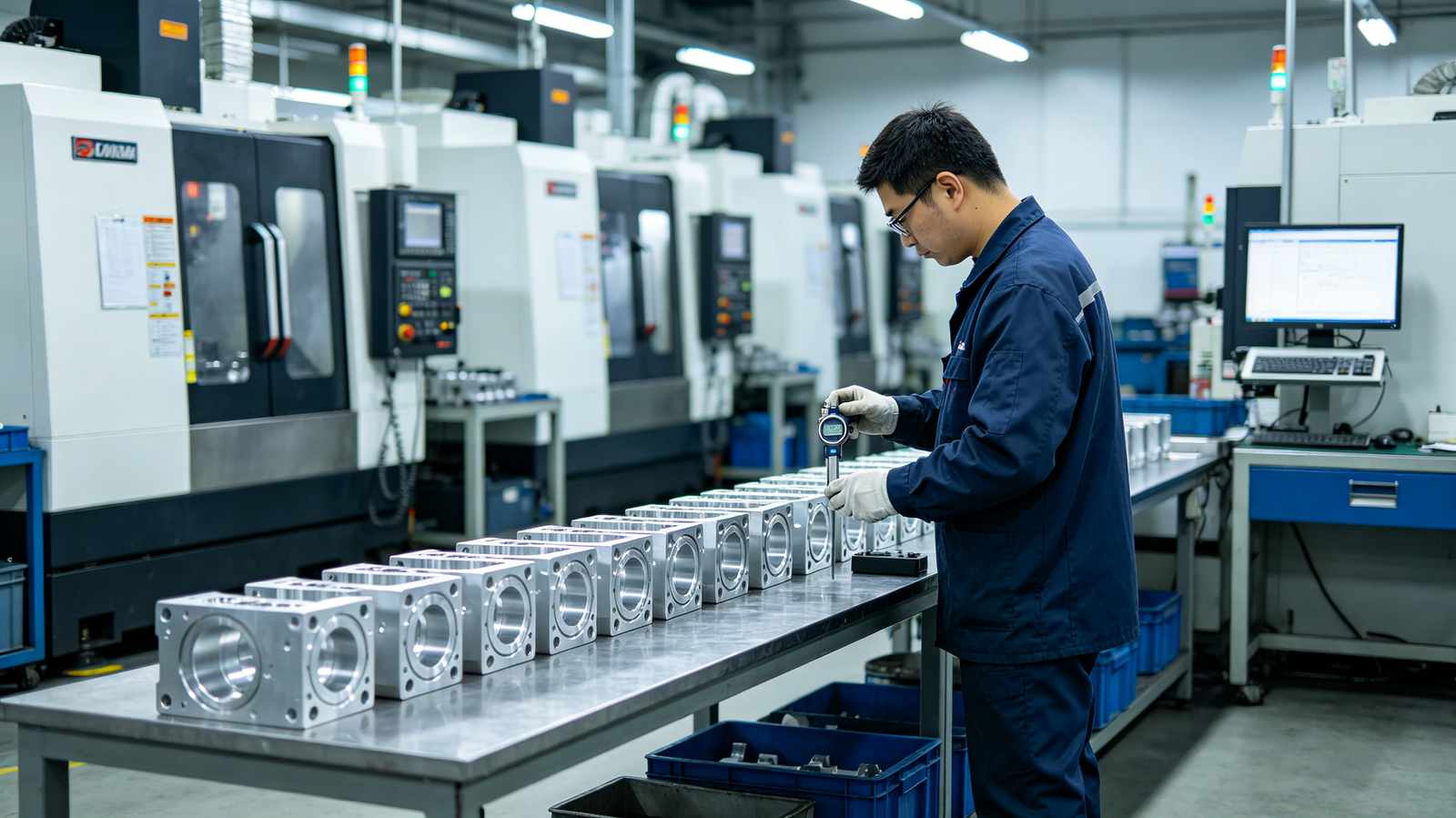
Thin walls are where alloy selection stops being theoretical. A 2 mm rib beside a 40 mm deep pocket sees a changing tool engagement, a rising temperature and a diminishing ability to resist cutting force, and whichever alloy holds its shape through that sequence wins the part. The failure is almost never a broken wall; it is a wall that measures correctly in the machine, springs after unclamping, and quietly destroys the flatness of the sealing face two operations later. That behaviour is driven by residual stress, heat input and the stiffness of the remaining material, not by yield strength.
Stage the roughing: Remove material in balanced passes from both sides of a wall, leave a consistent skin for a final light cut, and allow a stress-relief pause before finishing, because a single heavy pocketing pass locks in the stress that a later finishing pass will release.
Control heat at the tool: Use sharp polished flutes, an appropriate coolant concentration and a chip load that clears rather than rubs, since 7075 in particular work hardens under a rubbing tool and turns the next pass into a heating cycle.
Design the fixture around the wall: Support thin sections with a dedicated soft jaw, a vacuum fixture or a sacrificial backing plate, and avoid clamping across an open pocket, because a distorted part that is held flat during machining will simply relax afterwards.
Plan the datum sequence: Machine the sealing face and the datum bores in the same setup wherever possible, then reference everything else from them, so any residual movement shows up as a measurable offset rather than an unexplained assembly gap.
The practical check is to ask how the supplier judges quality through a CMM report on a thin-walled part and whether they measure after unclamping rather than in the fixture. A shop that routinely machines 7075 housings will describe their tight-tolerance controls in terms of staging and stress relief, and will be able to show first-article evidence from a part with a similar wall-to-depth ratio. A shop that only talks about machine accuracy is usually describing a different problem.
✅ Ask when the part is measured: in the fixture it is a machining result, after unclamping it is a part.
Which alloy wins when the housing must hold tolerance and finish?
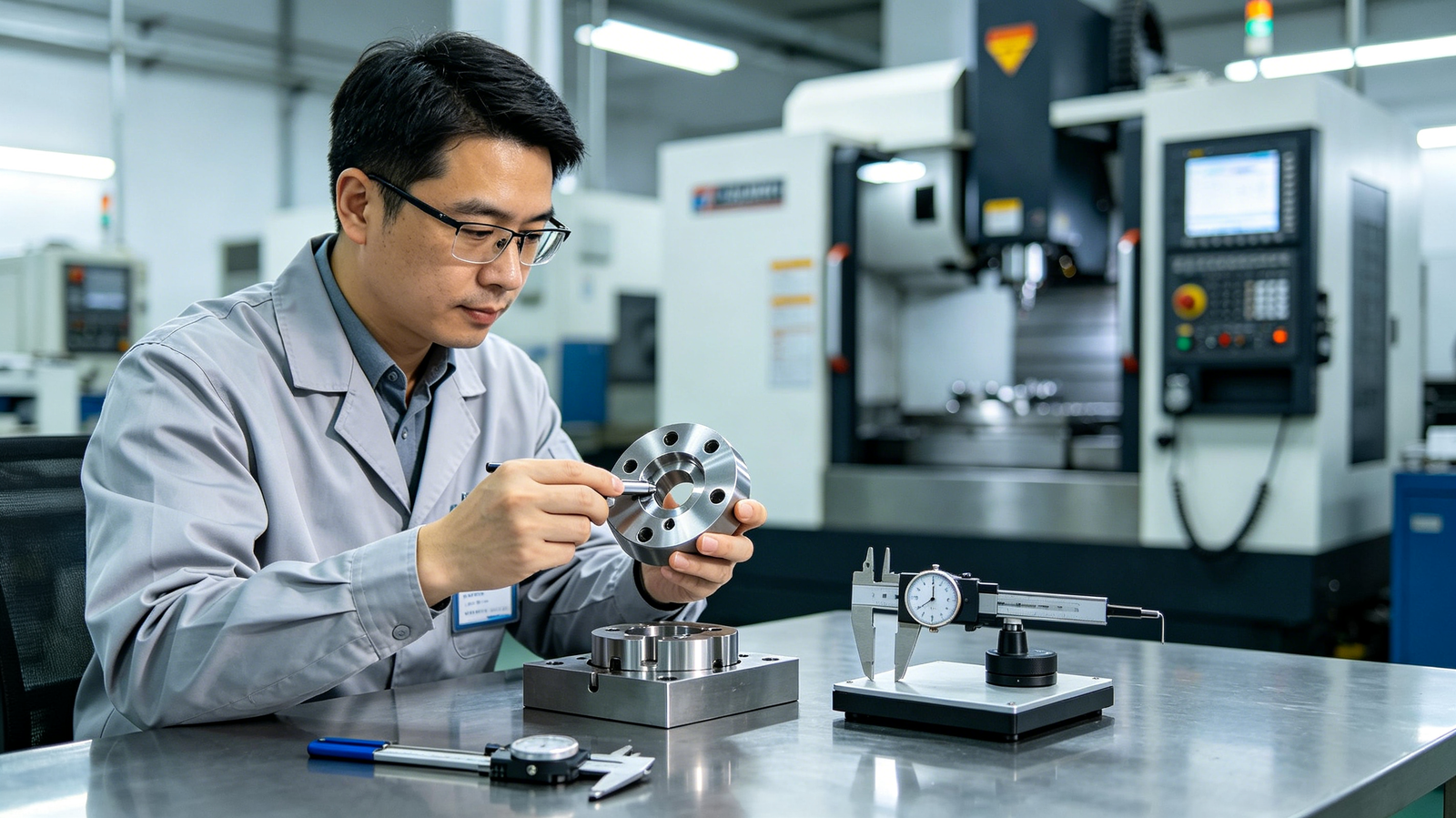
Once the geometry is under control, the final question is which alloy holds the dimensional and cosmetic requirement at a sensible total cost. For a sealed housing that will be anodised and must stay flat within a few hundredths over temperature cycling, 6061-T651 is often the quiet winner: it is stress-relieved by stretching, machines predictably and takes a uniform coating. 7075 wins when the load case genuinely needs it, and loses whenever the specification is really about flatness, sealing and appearance rather than yield strength. Choosing it by default usually adds material cost, tool cost and a stress-relief step to a part that did not need the strength.
Match the temper to the requirement: Specify T651 or T7351 where dimensional stability and stress-corrosion resistance matter, rather than defaulting to T6, because the stretched tempers materially reduce the movement that ruins a sealing face after machining.
Decide the finish at the drawing stage: If a uniform cosmetic anodise is required, treat it as an alloy selection input rather than a downstream process, since 7075 will not match the appearance of 6061 in the same bath.
Price the whole route: Compare material lead time, insert consumption, roughing stages, stress-relief handling and inspection frequency, not just the billet price, because the cheaper alloy often stays cheaper across every one of those lines.
Validate with a real first article: Require a CMM report on the unclamped part, a flatness reading on the sealing face after any coating, and a leak or assembly check where the housing has a functional seal.
Before releasing the order, it helps to review the supplier’s tight-tolerance process, their CMM reporting practice and how they document capability through FAI on comparable housings. Those three documents tell you whether the chosen temper and finishing route are actually controlled or simply assumed. Our service overview also lists which alloys and tempers are stocked, so a specification can be written against material that can actually be procured on the required lead time.
⚠️ A stronger alloy is not a better housing if the sealing face no longer seals.
Alloy selection matrix for complex milled housings
| Decision criterion | 6061-T6 | 6061-T651 | 7075-T6 | 7075-T7351 |
|---|---|---|---|---|
| Yield strength | Moderate, ample for most housings | Moderate, same as T6 | Very high, roughly double 6061 | High, slightly below T6 |
| Dimensional stability after roughing | Good with staged passes | Best in class, stretch relieved | Prone to movement in thin walls | Good, stress and corrosion relieved |
| Machinability and tool life | Excellent, long insert life | Excellent, long insert life | Higher forces, faster wear | Higher forces, faster wear |
| Anodising consistency | Uniform and cosmetic | Uniform and cosmetic | Darker, more variable | Darker, more variable |
| Material lead time and cost | Short, lowest | Short, low premium | Longer, notable premium | Longest, highest premium |
For most sealed electronic, hydraulic or optical housings, the 6061-T651 column is the sensible default: it is stable, finishes well and is available quickly. 7075 earns its place when a genuine structural load case, a weight target or a wear requirement justifies the extra staging, and T7351 is the version to specify when that part also sees a corrosive or cycling environment.
The right column for a given programme depends on which of these rows you treat as non-negotiable, and a short technical review usually settles it faster than another round of pricing. For production parts where consistency matters more than the first-batch price, the controlled column almost always wins on total cost of ownership. If you want a second opinion on where your part sits, contact us and we will walk through the trade-offs with your drawing in front of us.
A practical selection sequence for your next housing RFQ
A defensible alloy choice comes out of four passes, and collapsing them into one email is the usual reason a housing arrives warped or the anodise looks wrong. Fix the function, interrogate the geometry, name the temper and finish, then validate on a real first article.
- Write down the actual load case: State the mechanical requirement and the sealing or flatness requirement separately, so the alloy is chosen for the constraint that really governs rather than for the largest number on a datasheet.
- Check the wall-to-depth ratio: Identify thin ribs, deep pockets and asymmetric material removal, and ask each supplier how they stage roughing and when they allow stress relief.
- Specify the temper and the finished state: Name T651 or T7351 where stability matters, and state whether flatness and roughness apply before or after anodising, since both change with the coating.
- Require an unclamped first-article report: Ask for CMM results taken after the part is released from the fixture, plus a flatness check on the sealing face and a functional seal test where applicable.
A useful closing check is to compare two quotations side by side with the finishing route written out. One supplier may quote 6061-T651 with a staged roughing pass and a CMM report on the unclamped part; another may quote 7075-T6 at a similar headline price but assume a single heavy pocketing operation and inspection in the fixture. The numbers look comparable and the delivered parts will not be. Adding three lines to the comparison sheet, covering the temper, the stress-relief step and the point at which the part is measured, makes the difference visible without any technical argument. It is a small piece of RFQ hygiene that prevents the common outcome where the cheaper quote becomes the more expensive part once the sealing face has been re-machined.
The temper designation deserves more attention than it usually receives in an RFQ. A drawing that says simply 6061 or 7075 leaves the supplier to choose between T6, T651 and T7351, and those are not interchangeable on a pocketed housing. T651 has been stress-relieved by controlled stretching after quenching, which substantially reduces the movement that appears when material is removed asymmetrically; on a thin-walled part that single letter can be the difference between a sealing face that holds flatness and one that needs a second operation. T7351 on 7075 trades a little peak strength for markedly better stress-corrosion resistance, which matters on a part that sees a cycling or corrosive environment. Naming the temper costs nothing at the drawing stage and removes an assumption that is expensive to discover after the first article.
A second practical consideration is the finishing route and its interaction with the chosen alloy. If the housing will be anodised, the cosmetic expectation should be treated as an input to alloy selection rather than a downstream detail: 6061 produces a uniform, predictable layer, while 7075 tends toward a darker and more variable appearance in the same bath. Mixing the two in a visible assembly is a recurring source of colour complaints that no amount of process control fully resolves. Where a functional hard-anodised surface is required, the coating thickness also changes the dimensions of bores and sealing lands, so the drawing should state whether the tolerance applies before or after coating and the inspection plan should measure in the finished state. These are small specification decisions, but they account for a disproportionate share of housing rework.
Cost comparisons also benefit from a wider boundary than the billet price. 7075 generally carries a material premium and a longer lead time in the thickness a housing needs, higher cutting forces that consume inserts faster, and often an extra roughing stage or stress-relief pause to keep thin walls stable. On a part where the strength is genuinely required those costs are entirely justified, but on a part where the real requirement is a flat sealing face and a stable bore position they are paid for no functional gain. A one-page cost build showing material, roughing passes, finishing passes, insert consumption, stress-relief handling and inspection frequency makes the trade-off visible, and it usually settles the alloy question faster than a datasheet comparison ever does.
Frequently asked questions from procurement teams
Is 7075 always the better choice for a structural housing?
No. It is the better choice when a calculated load case, a fatigue requirement or a hard weight target genuinely needs the strength. Where the governing requirement is a flat sealing face, a stable bore position or a uniform cosmetic finish, 6061-T651 is usually easier to hold and cheaper to produce. Specify the requirement, then choose the alloy, rather than the other way round.
Why did a 7075 housing move after machining?
Because removing material asymmetrically releases the residual stress locked in during rolling and quenching, and 7075 carries more of it than 6061. Balanced roughing from both sides, a stress-relief pause before finishing and a light final pass reduce the movement substantially. A part measured while still clamped can look perfect and then spring on release.
Can 7075 be anodised to match 6061 cosmetically?
Not reliably in the same bath. The zinc and copper content produces a darker, sometimes mottled anodic layer, so mixing the two alloys in one visible assembly is a common cause of colour complaints. If appearance matters, either use 6061 for the visible parts or agree a separate finish standard for the 7075 components.
What is the difference between T6 and T651?
T651 is a T6 part that has been stress-relieved by controlled stretching after quenching, which significantly reduces the residual stress that causes distortion during machining. For a pocketed housing with thin walls it is usually worth the small premium. On 7075, T7351 additionally improves stress-corrosion resistance at some cost to peak strength.
Can you help choose the alloy for a reverse-engineered housing?
Yes. Where the original part arrives without a material specification, we check hardness and conductivity, look at the failure mode and the mating assembly, and propose an alloy and temper tied to the function rather than guessing from appearance. Ruicheng Industrial Design Co., Ltd. keeps milling, measurement and inspection in one workflow, so the recommendation can be validated on a first article rather than left as an assumption.
Conclusion
Alloy selection for a complex housing is a manufacturability decision wearing a strength label. The part that holds its datum, seals properly and anodises evenly is the right choice even when its yield strength is half the alternative, because a warped housing fails every requirement at once. Name the real constraint, check the wall-to-depth ratio, specify the temper and the finished state, and validate on an unclamped first article. Do that and the 6061-versus-7075 question usually answers itself before the first billet is ordered.
For expert assistance in implementing 6061 and 7075 aluminium CNC milling for complex housings for your production needs, visit our resource center or contact us. Let’s help you scale up your manufacturing with precision and efficiency!