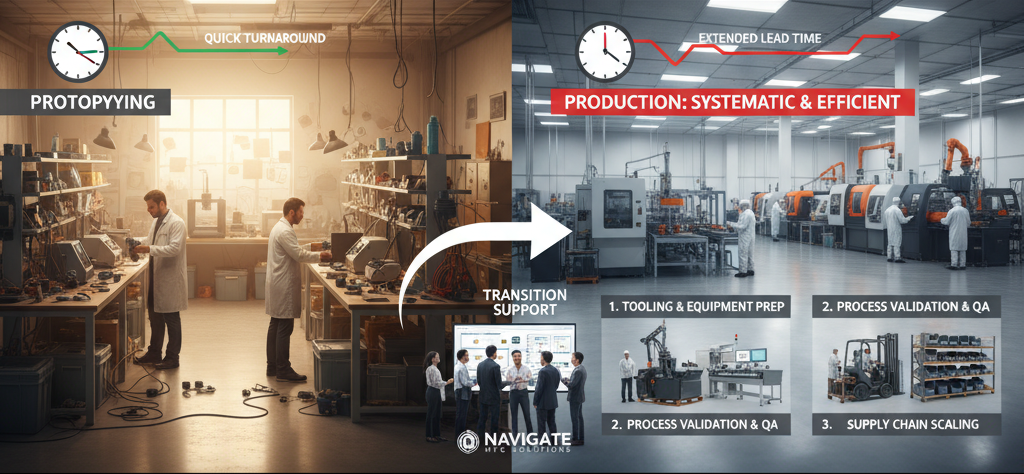
Lead time often increases dramatically during the prototype-to-production transition because the manufacturing process fundamentally changes from a flexible, speed-optimized approach to a systematic, efficiency-focused operation that requires extensive setup, validation, and quality assurance steps not needed during prototyping. At our facility, we’ve helped countless clients navigate this transition by understanding the underlying causes and implementing strategies to minimize timeline impacts.
The lead time expansion occurs in three key areas: tooling and equipment preparation1, process validation2 and quality system implementation3, and supply chain scaling4 – each adding necessary but time-consuming steps that separate quick-turn prototyping from reliable, repeatable production. Understanding these factors helps set realistic expectations and develop effective timeline management strategies.
What tooling factors contribute to lead time expansion?
The transition from prototype tooling to production tooling requires designing, manufacturing, and validating durable tools capable of maintaining precision through thousands of cycles, adding weeks or months to the timeline that weren’t required for prototype development. This tooling upgrade is one of the most significant factors in lead time expansion5.
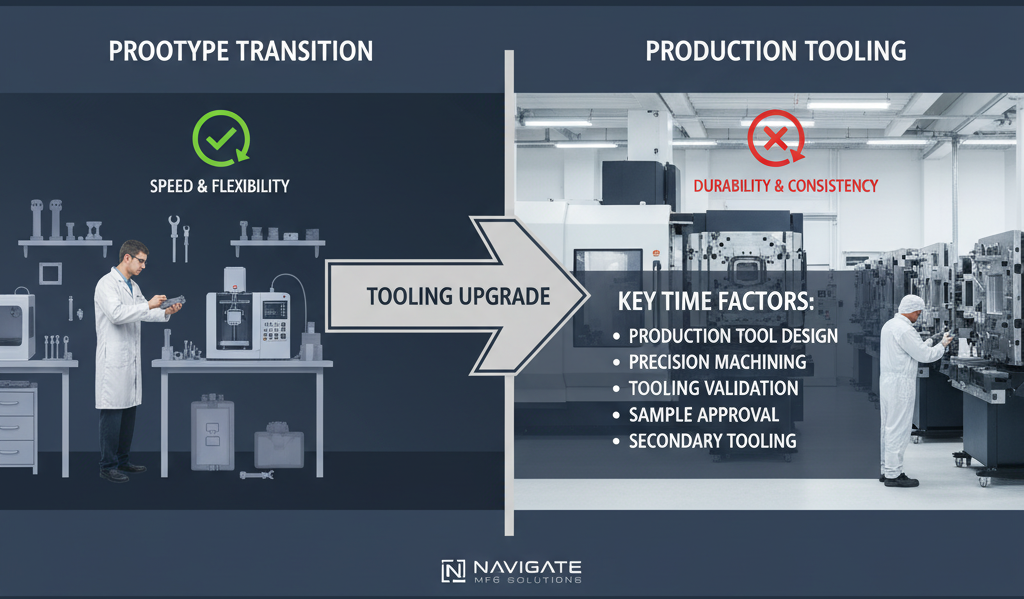
Key tooling-related time factors:
- Production tool design requiring durability and maintenance considerations
- Precision machining of production-grade tooling materials
- Tooling validation and debugging processes
- Sample approval and process capability studies6
- Secondary tooling for fixtures, gauges, and handling equipment
While prototype tooling focuses on speed and flexibility, production tooling must prioritize durability, consistency, and maintenance accessibility – all requiring additional time investment.
How do quality validation requirements affect timelines?
Production requires comprehensive process validation, statistical quality controls, and documentation systems that add significant time to the schedule but are essential for ensuring consistent quality across large volumes. These quality assurance steps, while time-consuming, prevent much larger delays from quality issues during full-scale production.
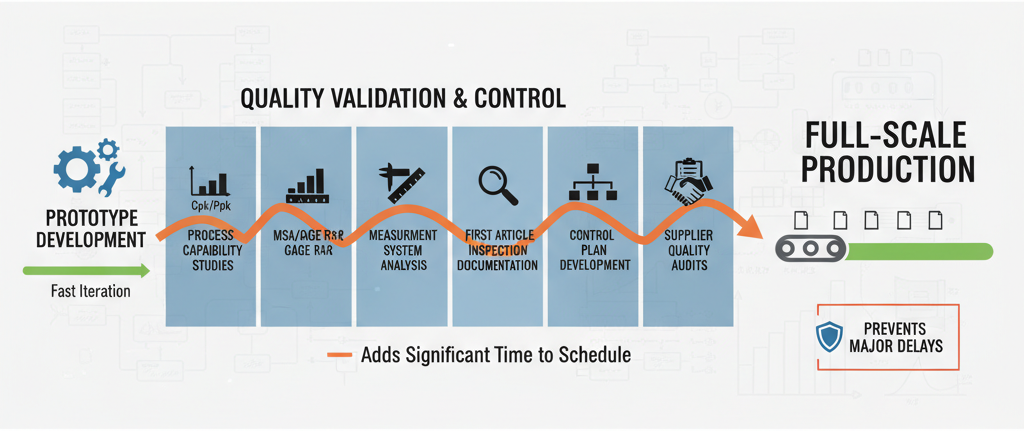
Validation requirements adding time:
- Process capability studies (Cpk/Ppk analysis)
- Measurement system analysis (MSA/gage R&R)
- First article inspection documentation
- Control plan development and implementation
- Supplier quality audits and approvals
Each validation step ensures that the production process can consistently meet specifications, but collectively they significantly extend the timeline compared to prototype development.
What supply chain factors increase lead times?
Scaling from prototype to production quantities requires transitioning from readily available materials and services to volume-appropriate suppliers who often have longer lead times due to larger order requirements and more rigorous quality systems. The supply chain that supports prototyping is rarely capable of supporting production volumes.
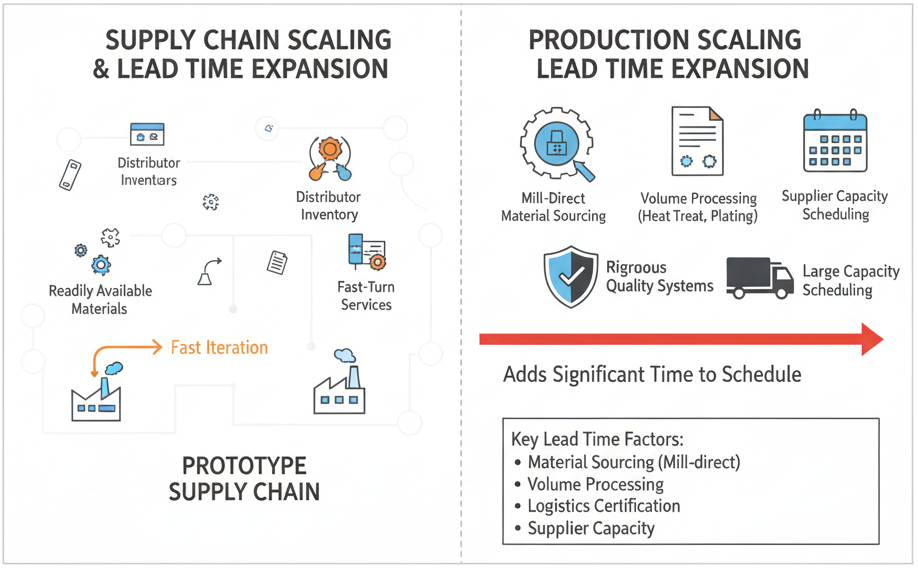
Supply chain time expansions:
- Material sourcing from mill-direct vs. distributor inventory
- Volume processing lead times (heat treatment, plating, coating)
- Quality certification requirements for production materials
- Logistics planning for larger shipments
- Supplier capacity scheduling and allocation
Production-scale suppliers operate differently from prototype service providers, with longer planning horizons and more rigorous quality processes that naturally extend lead times.
How can manufacturers minimize lead time impacts?
Strategic planning during the prototype phase, including production-intent design, early tooling development, and supply chain engagement, can significantly reduce lead time expansion by addressing production requirements before the formal transition begins. Proactive planning is the most effective way to manage timeline expectations.
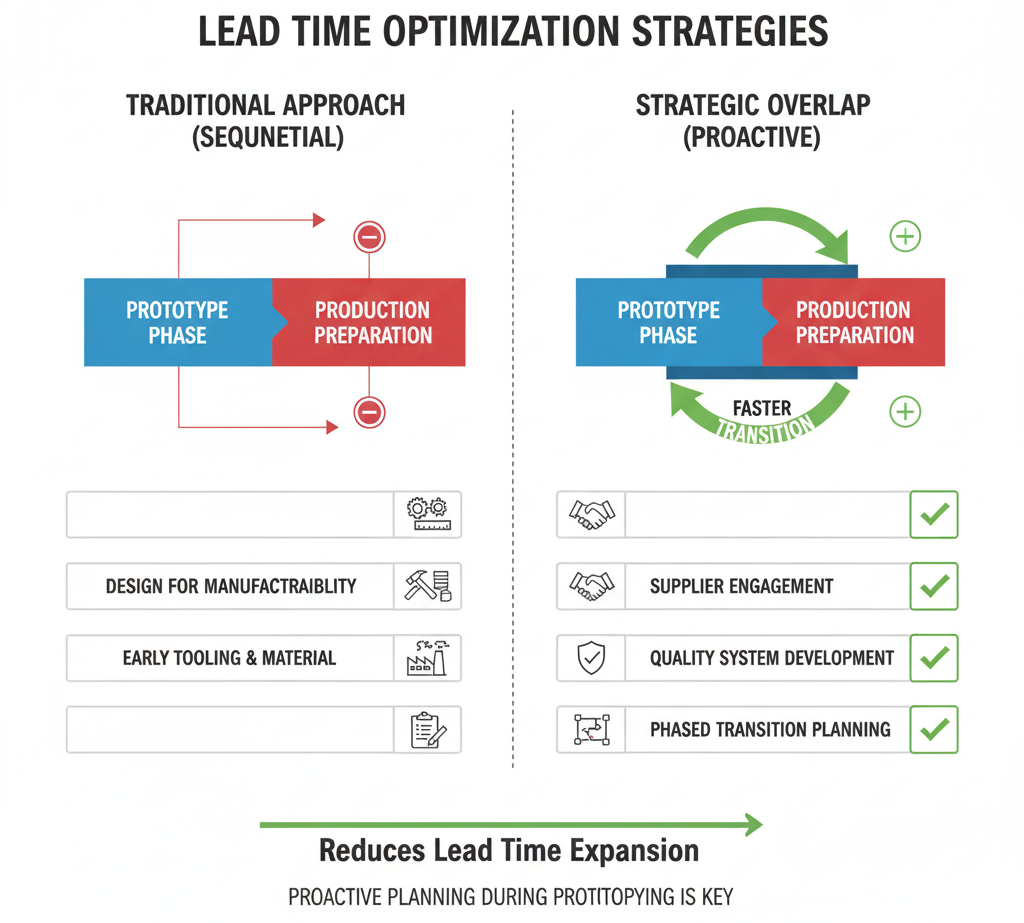
Effective timeline management strategies:
- Design for manufacturability reviews during prototyping
- Early tooling design and material procurement
- Production supplier engagement during prototype phase
- Quality system development parallel to prototype completion
- Phased transition planning with overlapping activities
Manufacturers who successfully manage lead time expansion begin production preparation during the prototype phase rather than waiting for prototype completion.
What realistic timeline expectations7 should buyers have?
Buyers should expect a 3-5x increase in lead time when moving from prototype to initial production, with the first production batches typically requiring 8-16 weeks compared to 2-4 weeks for prototypes, depending on component complexity and volume requirements. Understanding these realistic timelines helps prevent project delays and frustration.
| Phase | Typical Lead Time | Key Time Components |
|---|---|---|
| Prototype | 2-4 weeks | Quick-turn machining, basic materials, minimal tooling |
| Production Setup | 4-8 weeks | Tooling fabrication, process validation, supply chain setup |
| First Production | 8-16 weeks | Volume material sourcing, quality system implementation, capacity planning |
These timelines vary by component complexity, but the pattern of significant lead time expansion remains consistent across most metal component manufacturing.
Ready to optimize your prototype-to-production timeline?
Our integrated approach to prototype and production manufacturing minimizes lead time expansion through early production planning, parallel process development, and established supply chain relationships that ensure efficient scaling when you’re ready to move to volume production. Contact us to discuss how we can help manage your timeline expectations and optimize your prototype-to-production transition.
Why manufacturers choose our timeline management:
- Early production planning during prototyping
- Established production supply chain relationships
- Parallel process development and validation
- Realistic timeline forecasting and communication
- Proven track record of on-time production launches
Don’t let lead time surprises derail your product launch – partner with a manufacturer who understands how to manage the prototype-to-production transition efficiently.
-
Explore how proper tooling preparation can streamline production and reduce delays. ↩
-
Learn about process validation to ensure quality and efficiency in production. ↩
-
Discover the importance of quality systems in maintaining production standards. ↩
-
Understanding supply chain scaling can help optimize production efficiency and timelines. ↩
-
Understanding lead time expansion is crucial for effective project management and timely product launches. ↩
-
Understanding process capability studies can help improve production quality and efficiency. ↩
-
Setting realistic timeline expectations is key to successful project management in manufacturing. ↩