Choosing between anodizing1 and powder coating2 is a critical decision when finishing metal parts. Both processes improve appearance and durability, but they serve different functional needs, materials, and industries. Understanding the real differences helps reduce coating failures, control cost, and ensure long-term performance in real-world applications.

What Is Anodizing?
Anodizing is an electrochemical process3 that enhances the natural oxide layer on metal surfaces, most commonly aluminum. Instead of adding material, anodizing transforms the surface itself into a hard, corrosion-resistant layer.
Anodizing becomes part of the metal, which means it will not peel, chip, or flake over time.

Anodizing is widely used for parts that require precision, tight tolerances, and long-term surface stability. It also allows color dyeing while maintaining dimensional accuracy4, making it suitable for functional and cosmetic components.
What Is Powder Coating?
Powder coating is a dry finishing process where electrostatically charged powder is sprayed onto a metal surface and cured in an oven. The coating forms a thick, protective layer over the part.
Powder coating provides excellent surface coverage, strong impact resistance, and a wide range of colors and textures.
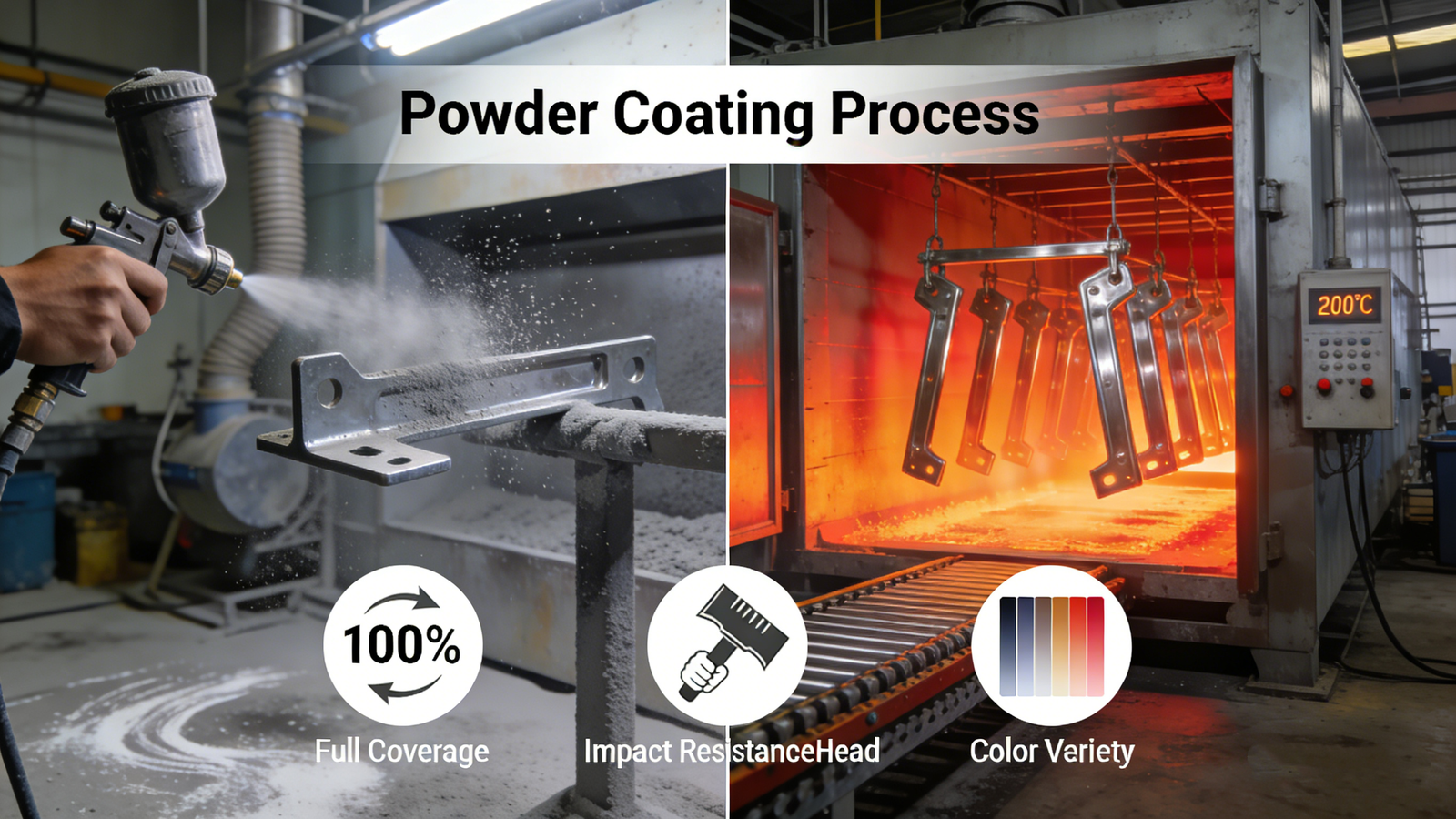
This process is commonly used for steel, aluminum, and fabricated parts that require enhanced surface protection5 and visual appeal6 rather than micron-level precision.
Key Differences Between Anodizing and Powder Coating
While both processes improve durability, their performance characteristics differ significantly.
The choice depends on material type, tolerance requirements7, appearance goals, and operating environment.
| Comparison Factor | Anodizing | Powder Coating |
|---|---|---|
| Coating Type | Converts surface | Adds surface layer |
| Typical Thickness | Thin and precise | Thick and uniform |
| Material Suitability | Aluminum | Aluminum, steel, others |
| Wear Resistance | Excellent | Good |
| Color Options | Limited but stable | Wide variety |
| Tolerance Impact | Minimal | Noticeable |
Durability and Corrosion Resistance
Anodized surfaces perform exceptionally well in corrosive and outdoor environments, especially for aluminum components. The oxide layer is hard and chemically stable.
Anodizing offers superior corrosion resistance without increasing part dimensions.
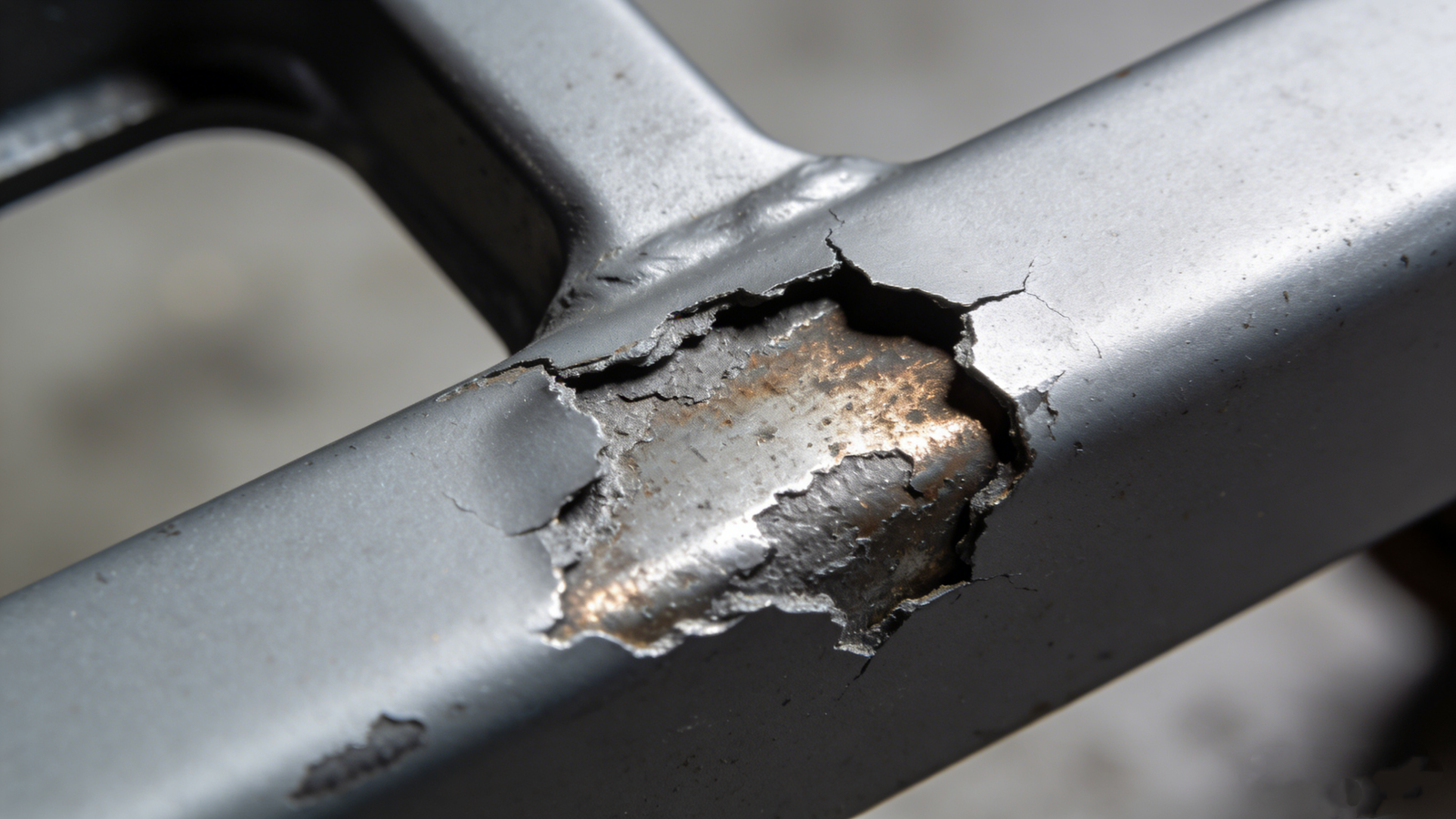
Powder coating also provides strong corrosion protection, particularly when combined with proper surface preparation. However, damage to the coating can expose the base metal underneath.
Appearance and Design Flexibility
Powder coating allows for creative freedom, including matte, gloss, textured, and custom color finishes. This makes it ideal for visible or consumer-facing parts.
Powder coating delivers strong visual impact and consistent surface appearance across large parts.

Anodizing offers a more technical and refined appearance, often preferred for precision components, industrial equipment, and high-end aluminum products.
Tolerance and Precision Considerations
For CNC machined parts with tight tolerances, surface thickness matters.
Anodizing is better suited for precision CNC components because it preserves dimensional accuracy4.
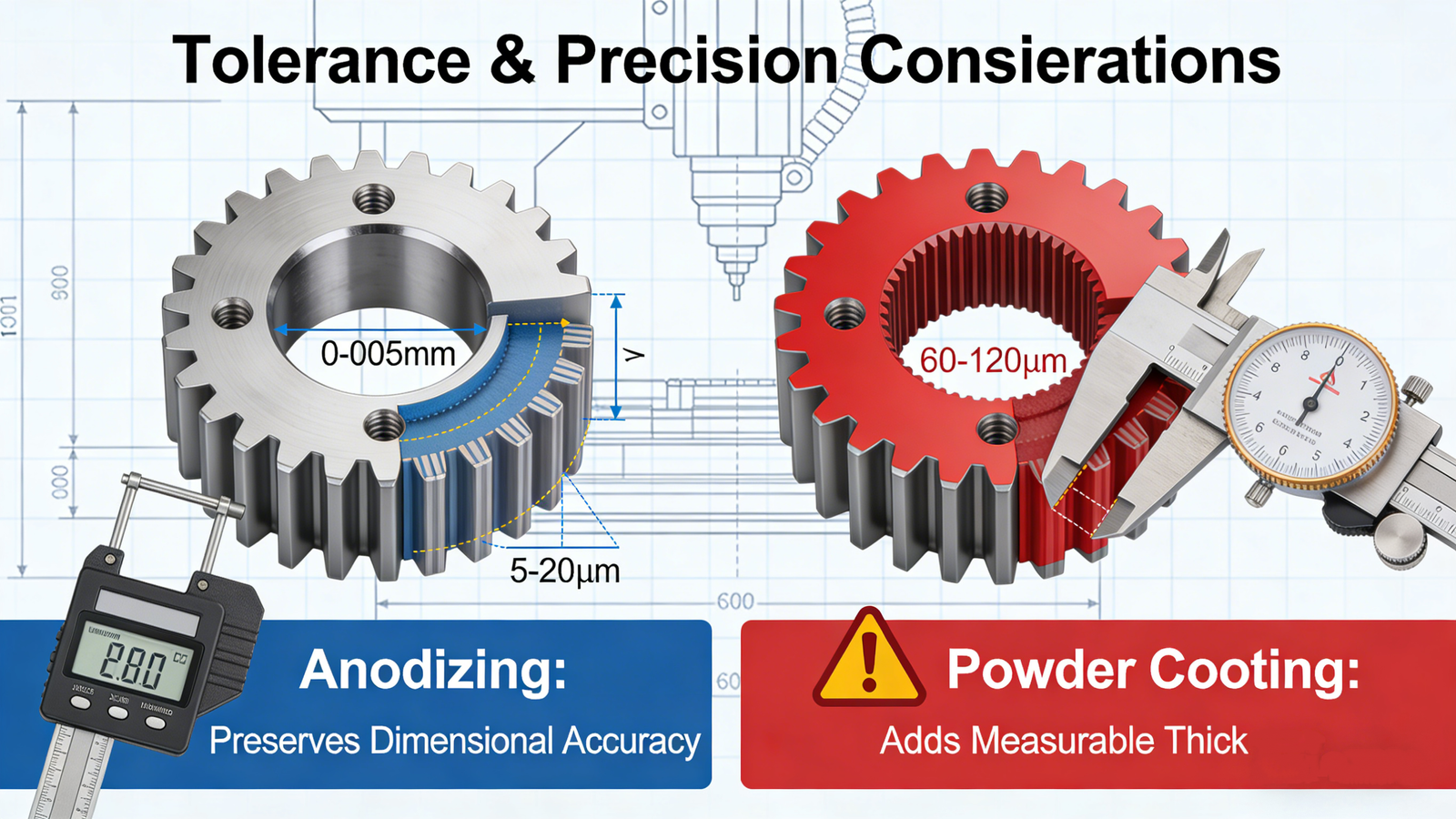
Powder coating adds measurable thickness, which must be accounted for during design and machining. This makes it less suitable for high-precision mating surfaces.
How Ruicheng Supports Both Finishing Processes
Ruicheng provides integrated metal manufacturing and finishing services, ensuring compatibility between machining and surface treatment.
Surface finishing is managed as part of the overall manufacturing process, not as a separate step.
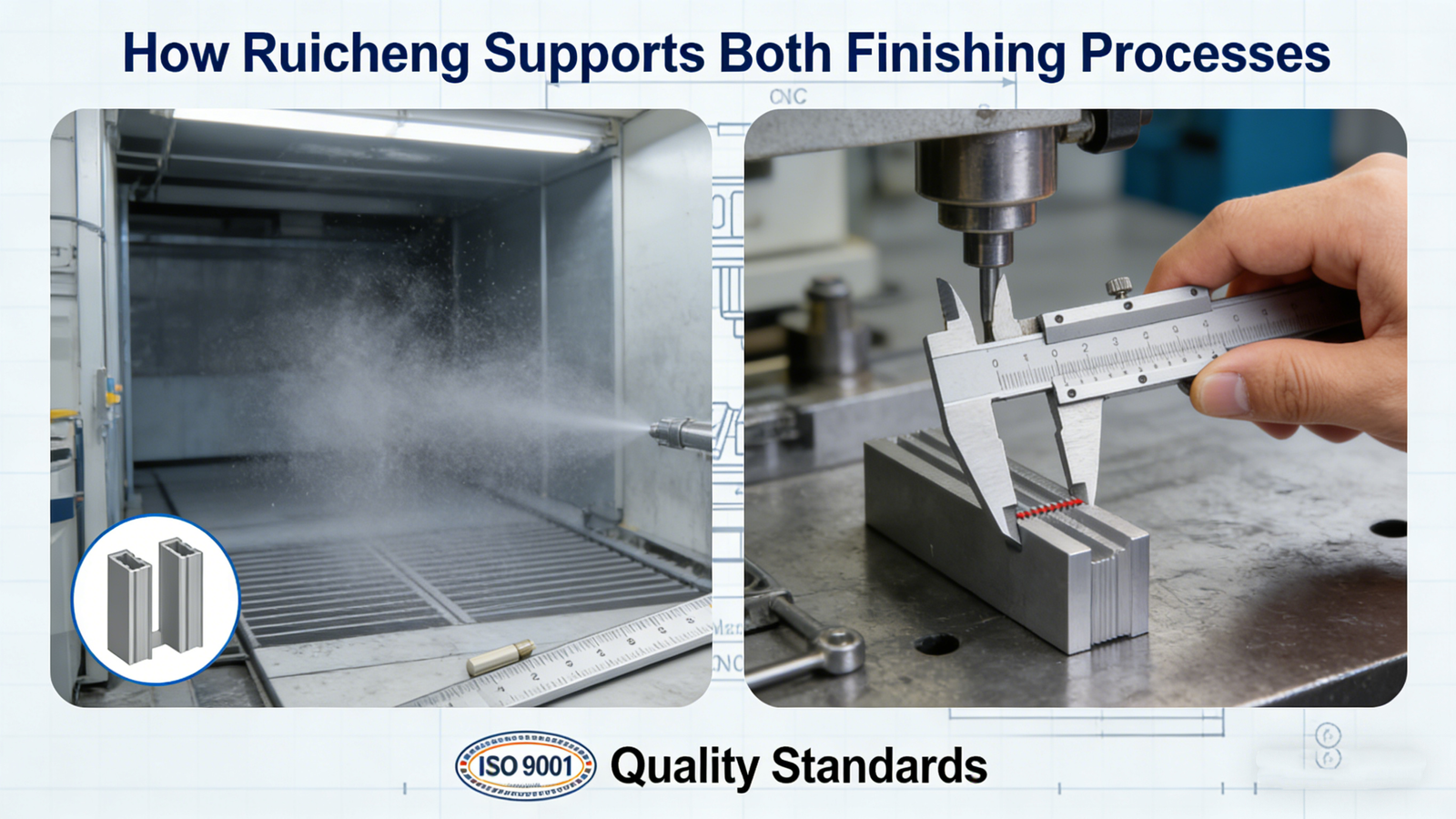
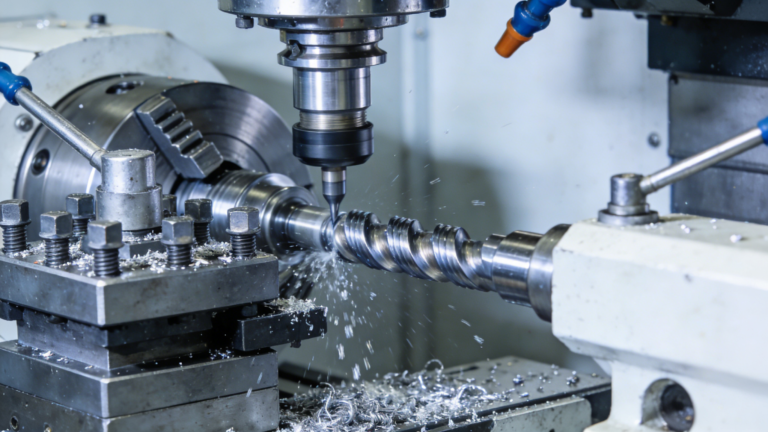
Our capabilities include CNC machining8, prototyping, stamping, extrusion, die casting, and coordinated anodizing and powder coating solutions. All processes follow ISO 9001 quality standards9 to ensure consistency and traceability.
Real Application Example
For an aluminum CNC enclosure requiring both corrosion resistance and precise fit, Ruicheng applied anodizing to preserve tolerances while enhancing surface durability.
The customer achieved stable assembly performance and a clean, professional appearance without rework.
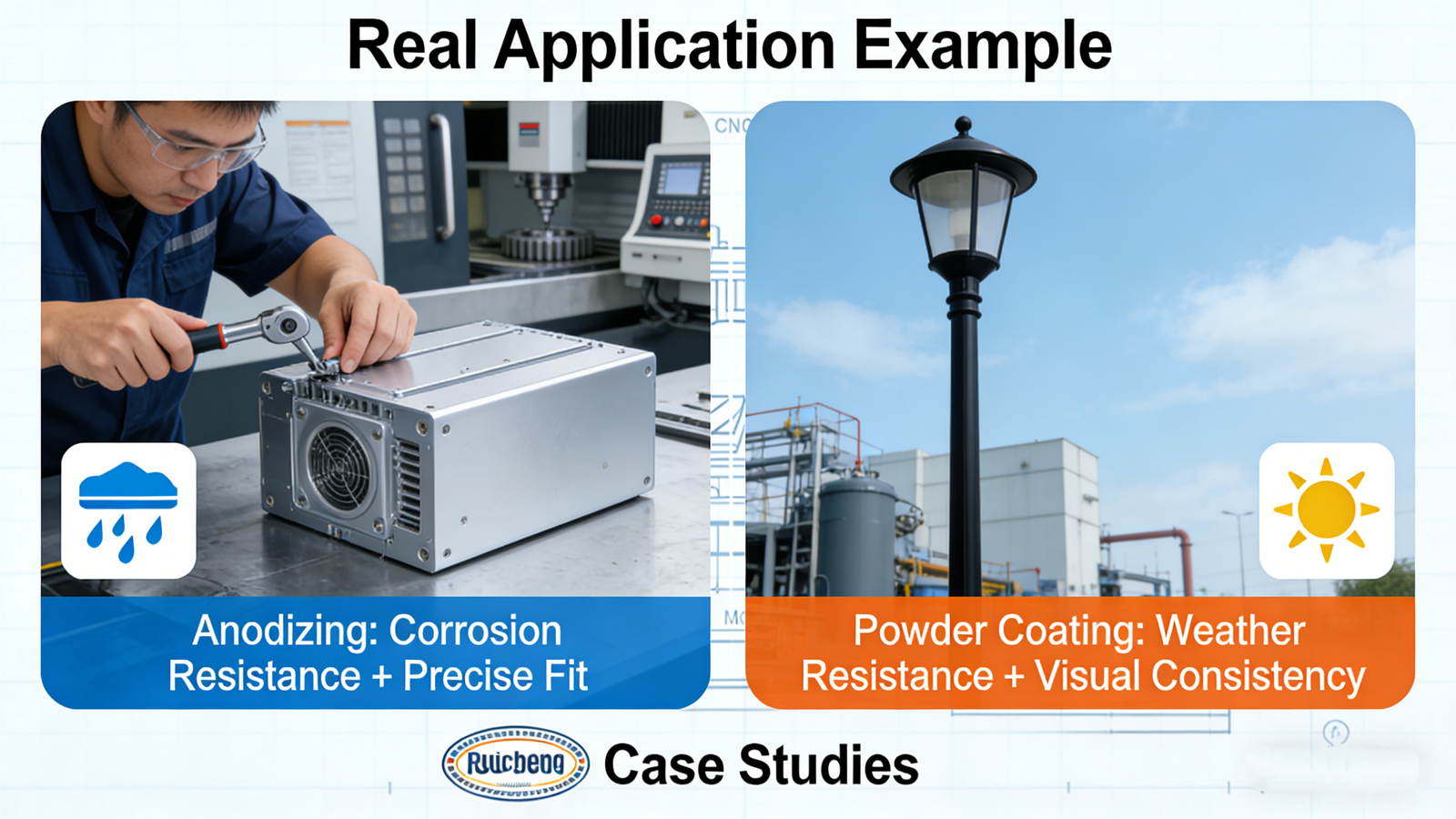
In another project involving large fabricated steel frames, powder coating was selected to improve weather resistance and visual consistency for outdoor use.
Frequently Asked Questions
Which finish is better for aluminum CNC parts?
Anodizing is usually preferred for precision aluminum parts.
It maintains tight tolerances while offering excellent corrosion resistance.
Can powder coating be used on aluminum?
Yes, but thickness must be considered.
Design adjustments are often required to account for coating build-up.
Which finish lasts longer outdoors?
Both perform well when applied correctly.
Anodizing offers superior long-term stability for aluminum in harsh environments.
Contact Us
Need help choosing the right surface finish for your metal parts?
Email: marketing@chinaruicheng.com
WhatsApp: +8615980769781
Contact page: https://custommetalpro.com/contact-us/
Ruicheng combines CNC machining expertise, multiple finishing options, and certified quality systems to deliver metal parts that meet both functional and visual requirements.
-
Explore this link to understand the anodizing process and its benefits for metal finishing. ↩
-
Discover the benefits of powder coating and how it enhances the durability and appearance of metal surfaces. ↩
-
Understand the electrochemical process behind anodizing and its impact on metal surfaces. ↩
-
Understand the significance of maintaining dimensional accuracy in CNC machined parts. ↩ ↩
-
Learn how powder coating acts as a protective layer for metal surfaces against damage. ↩
-
Explore how powder coating can transform the look of metal parts with various finishes. ↩
-
Learn about the importance of tolerance requirements in achieving precise metal finishes. ↩
-
Explore the world of CNC machining and its critical role in modern manufacturing. ↩
-
Discover how ISO 9001 standards ensure quality and consistency in manufacturing processes. ↩