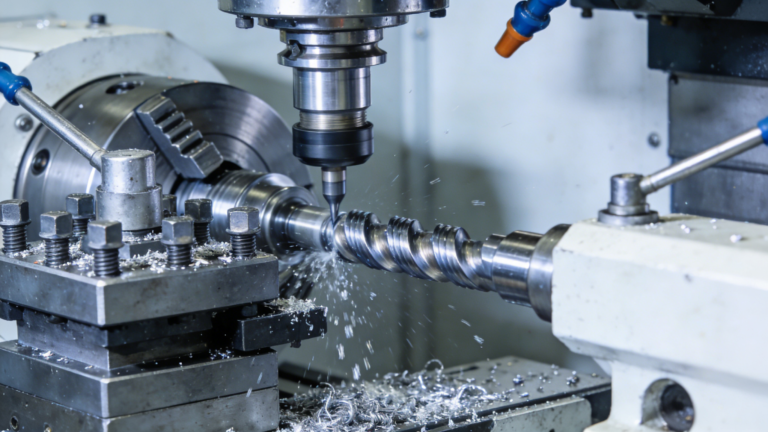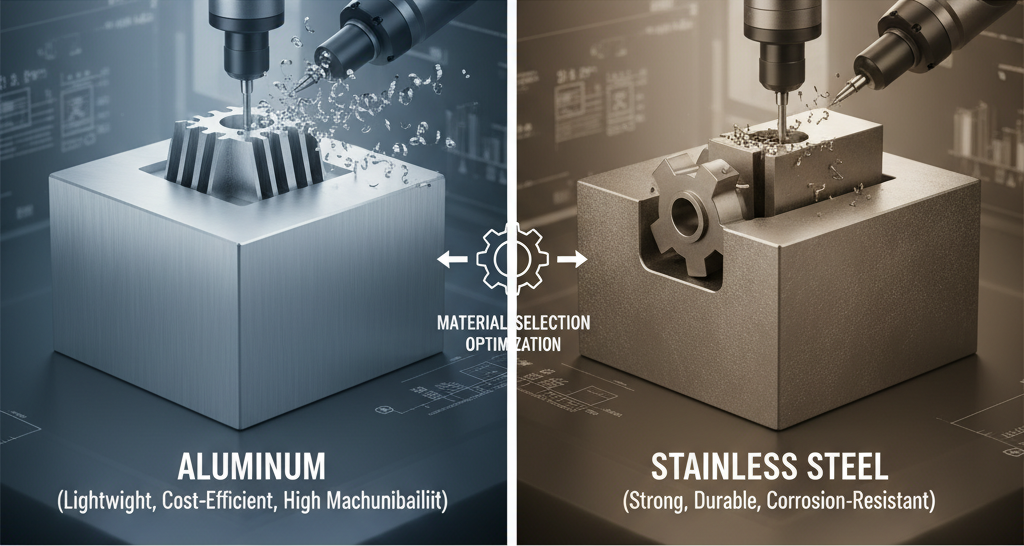
In precision machining, material selection between aluminum and stainless steel significantly impacts manufacturing efficiency, cost, and final part performance. Understanding their fundamental differences helps designers and engineers make informed decisions that optimize both production processes and product functionality.
Material Properties Comparison
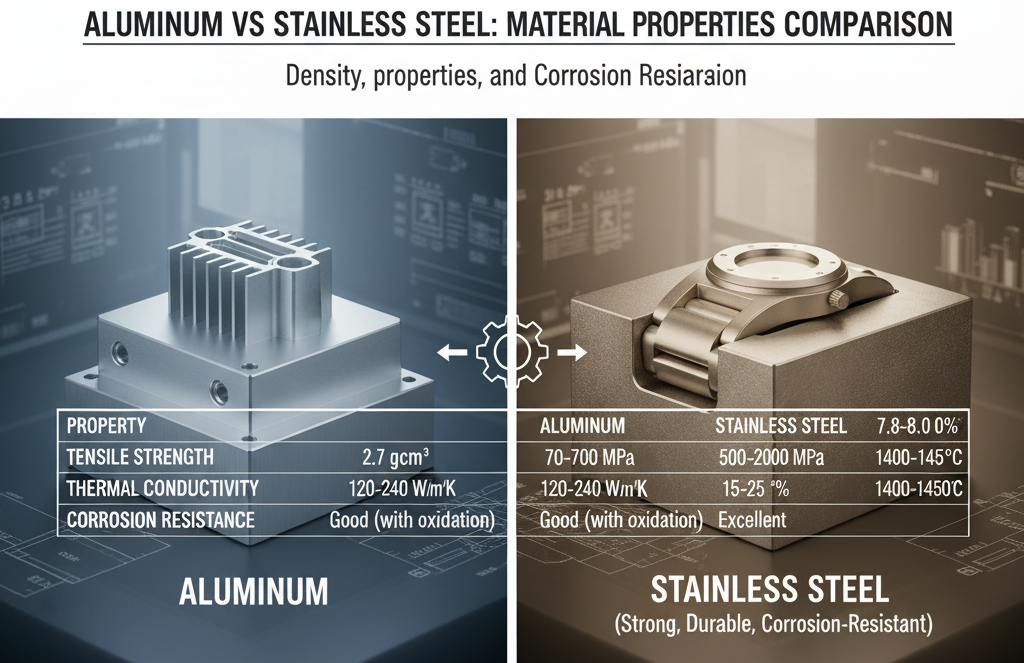
Aluminum and stainless steel exhibit fundamentally different physical and mechanical properties that directly influence their machining characteristics and application suitability. These differences span density, strength, thermal conductivity, and corrosion resistance.
| Property | Aluminum | Stainless Steel |
|---|---|---|
| Density | 2.7 g/cm³ | 7.8-8.0 g/cm³ |
| Tensile Strength | 70-700 MPa | 500-2000 MPa |
| Thermal Conductivity | 120-240 W/m·K | 15-25 W/m·K |
| Melting Point | 660°C | 1400-1450°C |
| Corrosion Resistance | Good (with oxidation) | Excellent |
Machinability and Cutting Performance
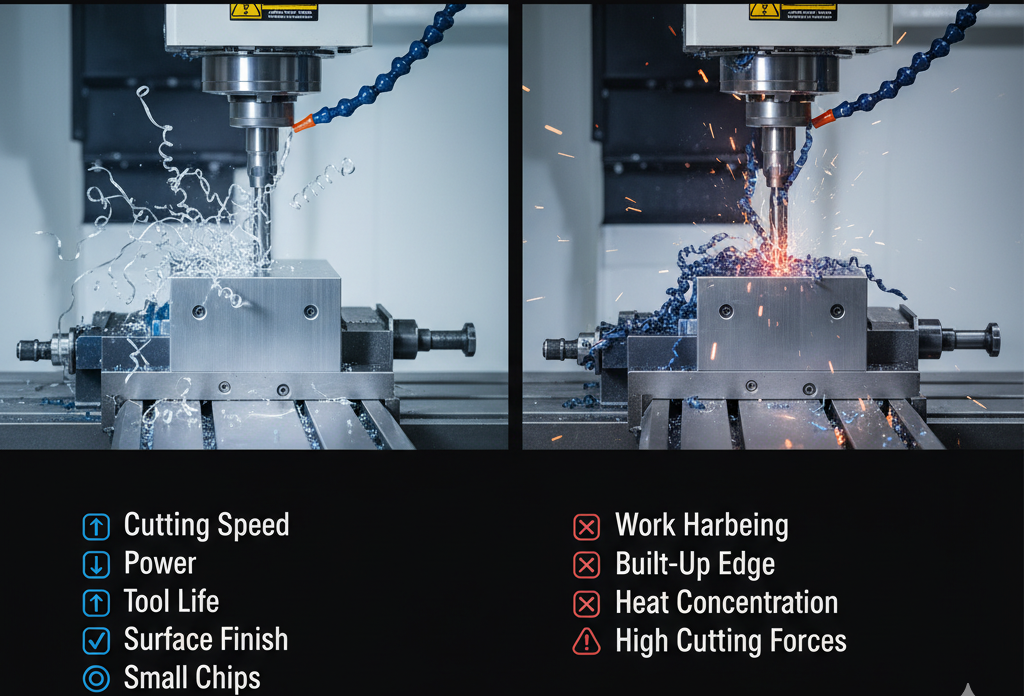
Aluminum offers superior machinability with faster cutting speeds and easier chip formation, while stainless steel requires more conservative parameters and specialized tooling due to its work-hardening tendency and higher strength. This fundamental difference drives significant variations in production efficiency and cost.
Aluminum machining advantages1:
- Higher cutting speeds: 3-5 times faster than stainless steel
- Lower power consumption: Reduced machine load and energy costs
- Longer tool life: Reduced tool wear and replacement frequency
- Better surface finish: Easier to achieve fine finishes
- Smaller chip formation: Cleaner and more manageable chips
- Work hardening: Requires constant feed rates and sharp tools
- Built-up edge: Material adhesion to cutting tools
- Heat concentration: Poor thermal conductivity causes localized heating
- Higher cutting forces: Requires more rigid machine tools
Tooling and Equipment Requirements
Machining aluminum and stainless steel demands different tool geometries, coatings, and machine capabilities to achieve optimal results and maintain dimensional accuracy. Proper tool selection is critical for efficiency and quality.
Aluminum tooling characteristics:
- Sharp cutting edges: High positive rake angles for clean shearing
- Polished flutes: Prevent chip adhesion and packing
- Specialized coatings: TiB2 or uncoated tools for non-stick properties
- High helix angles: Efficient chip evacuation
Stainless steel tooling requirements:
- Tough substrates: Carbide grades with high fracture resistance
- Wear-resistant coatings: TiAlN or AlCrN for thermal protection
- Reinforced geometries: Strong cutting edges to withstand higher forces
- Coolant-through tools: Effective heat management

Cost Considerations and Production Efficiency
Aluminum machining typically offers 40-60% lower production costs compared to stainless steel due to faster cycle times, reduced tooling expenses, and lower energy consumption. However, material selection must balance cost with functional requirements.
Cost comparison factors:
- Material cost: Aluminum generally lower cost per volume
- Machining time: Aluminum processes 3-5x faster
- Tooling expense: Stainless steel requires more expensive tools
- Energy consumption: Higher power requirements for steel
- Secondary operations: Additional processing for both materials
| Cost Factor | Aluminum Advantage | Stainless Steel Consideration |
|---|---|---|
| Cycle Time | 70-80% faster machining | Slower speeds required |
| Tool Life | 3-4x longer tool life | Frequent tool replacement |
| Setup Time | Faster setups possible | More rigid fixturing needed |
| Finish Quality | Easier to achieve high finishes | May require additional polishing |
Surface Finish and Precision Capabilities
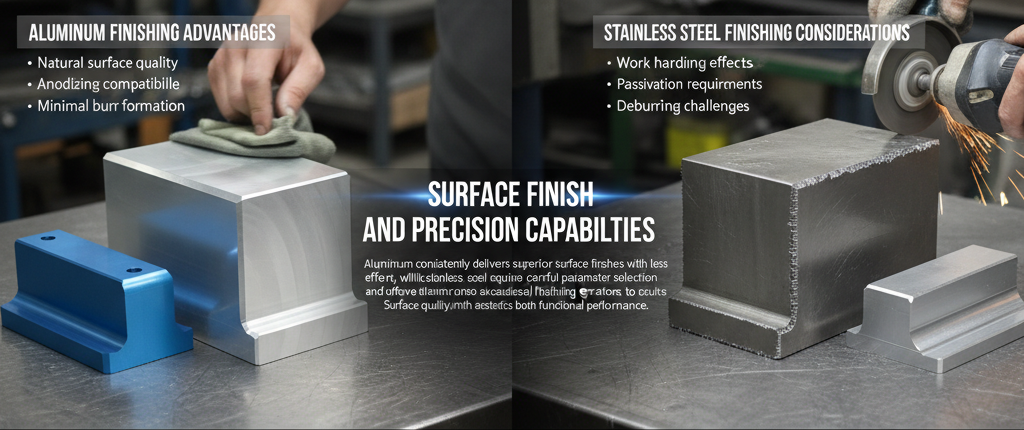
Aluminum consistently delivers superior surface finishes with less effort, while stainless steel requires more careful parameter selection and often additional finishing operations to achieve comparable results. Surface quality impacts both aesthetics and functional performance.
Aluminum finishing advantages:
- Natural surface quality: Inherently better finish from machining
- Easy polishing: Readily accepts various finishing processes
- Anodizing compatibility3: Excellent for decorative and protective finishes
- Minimal burr formation: Clean edges with proper tooling
Stainless steel finishing considerations:
- Work hardening effects: Can affect final surface integrity
- Multiple operations: Often requires separate finishing steps
- Passivation requirements: Essential for corrosion resistance
- Deburring challenges: Harder material requires more effort
Application-Specific Selection Guidelines
Material selection4 between aluminum and stainless steel should prioritize functional requirements, environmental conditions, and total lifecycle costs rather than initial manufacturing considerations alone. Each material excels in specific applications.
Choose aluminum when:
- Weight reduction is critical (aerospace, automotive)
- Thermal management is important (heat sinks, enclosures)
- High-volume production requires cost efficiency
- Excellent conductivity is needed (electrical components)
- Complex geometries require easy machinability
Choose stainless steel when:
- Structural strength is paramount (load-bearing components)
- Corrosion resistance5 is critical (marine, chemical environments)
- High temperature performance is required
- Hygienic surfaces are necessary (medical, food processing)
- Wear resistance is essential (high-abrasion applications)
Machining Parameter Optimization
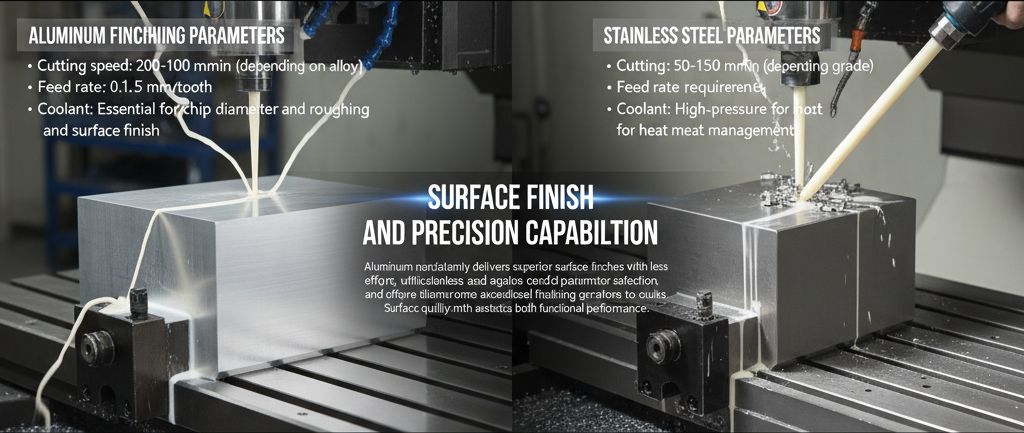
Optimal machining parameters vary significantly between aluminum and stainless steel, requiring different approaches to speed, feed, depth of cut, and coolant application. Proper parameter selection ensures quality and efficiency.
Aluminum machining parameters:
- Cutting speed: 200-1000 m/min (depending on alloy)
- Feed rate: 0.1-0.5 mm/tooth
- Depth of cut: Up to tool diameter for roughing
- Coolant: Essential for chip evacuation and surface finish
Stainless steel parameters:
- Cutting speed: 50-150 m/min (depending on grade)
- Feed rate: 0.05-0.25 mm/tooth
- Depth of cut: Conservative to avoid work hardening
- Coolant: High-pressure for heat management
Quality Control and Inspection Considerations
Dimensional stability6, surface integrity, and part accuracy require different inspection approaches for aluminum versus stainless steel due to their varying thermal expansion and material behavior. Quality assurance must adapt to material characteristics.
Aluminum inspection focus:
- Thermal expansion: Account for temperature variations
- Soft material handling: Prevent inspection damage
- Surface sensitivity: Careful probing to avoid marks
- Fast measurement: High throughput possible
Stainless steel inspection considerations:
- Magnetic properties: Affect certain measurement methods
- Surface hardness: More durable for repeated inspection
- Stable dimensions: Less thermal expansion concern
- Longer cycle times: Accommodate in planning
Future Trends and Material Development
Advanced aluminum alloys and stainless steel variants continue to evolve, offering improved machinability, enhanced properties, and better cost-performance ratios for specific applications. Material innovation drives machining advancement.
Emerging developments:
- High-strength aluminum alloys7: Bridging the strength gap
- Free-machining stainless steels8: Improved productivity
- Composite materials9: Combining benefits of both
- Advanced coatings: Enhanced tool performance for both materials
- Sustainable machining10: Environmentally conscious processes
Conclusion: Making the Right Choice
Selecting between aluminum and stainless steel requires careful consideration of mechanical requirements, production volume, cost targets, and end-use environment. Aluminum excels in high-speed, cost-sensitive applications where weight matters, while stainless steel provides superior strength and corrosion resistance for demanding environments.
For optimal results:
- Evaluate total lifecycle cost, not just material price
- Consider production volume and lead time requirements
- Match material properties to functional needs
- Consult with machining experts during design phase
- Prototype with both materials when requirements are borderline
Need help selecting the right material for your machining project? Contact our engineering team for expert guidance on material selection and machining optimization.
Why manufacturers trust our material expertise:
- Comprehensive material testing and validation
- Multi-material machining capabilities
- Technical guidance on material selection
- Cost optimization across entire project
- Quality assurance for all material types
-
Exploring aluminum’s benefits can lead to better manufacturing decisions and cost savings. ↩
-
Identifying challenges can help in selecting appropriate tools and techniques for stainless steel. ↩
-
Anodizing enhances aluminum’s properties, making it a valuable process in manufacturing. ↩
-
Choosing the right material is crucial for performance and cost-effectiveness in machining. ↩
-
Knowing the corrosion resistance of materials helps in selecting the right one for specific environments. ↩
-
Understanding dimensional stability is crucial for ensuring precision in machining. ↩
-
Exploring advanced materials can lead to innovations in machining and product performance. ↩
-
Learning about these materials can improve productivity and reduce machining costs. ↩
-
Exploring composites can lead to innovative solutions that combine the best properties of different materials. ↩
-
Sustainable practices are increasingly important for environmental responsibility in manufacturing. ↩