Introduction
Orthopedic implants are fundamentally different from conventional metal components, as they are designed to be placed inside the human body and remain there for long periods. Any overlooked detail in material selection, machining accuracy, or process control can escalate into serious regulatory and clinical risks.
From the perspective of Xiamen Ruicheng, a manufacturer deeply involved in titanium CNC machining for medical applications, procurement teams are not simply evaluating machining capability. They are assessing whether a supplier can consistently deliver safe, traceable, and auditable implant-grade components throughout the entire product lifecycle.
What Core Safety Standards Must Titanium CNC Machining for Orthopedic Implants Meet?

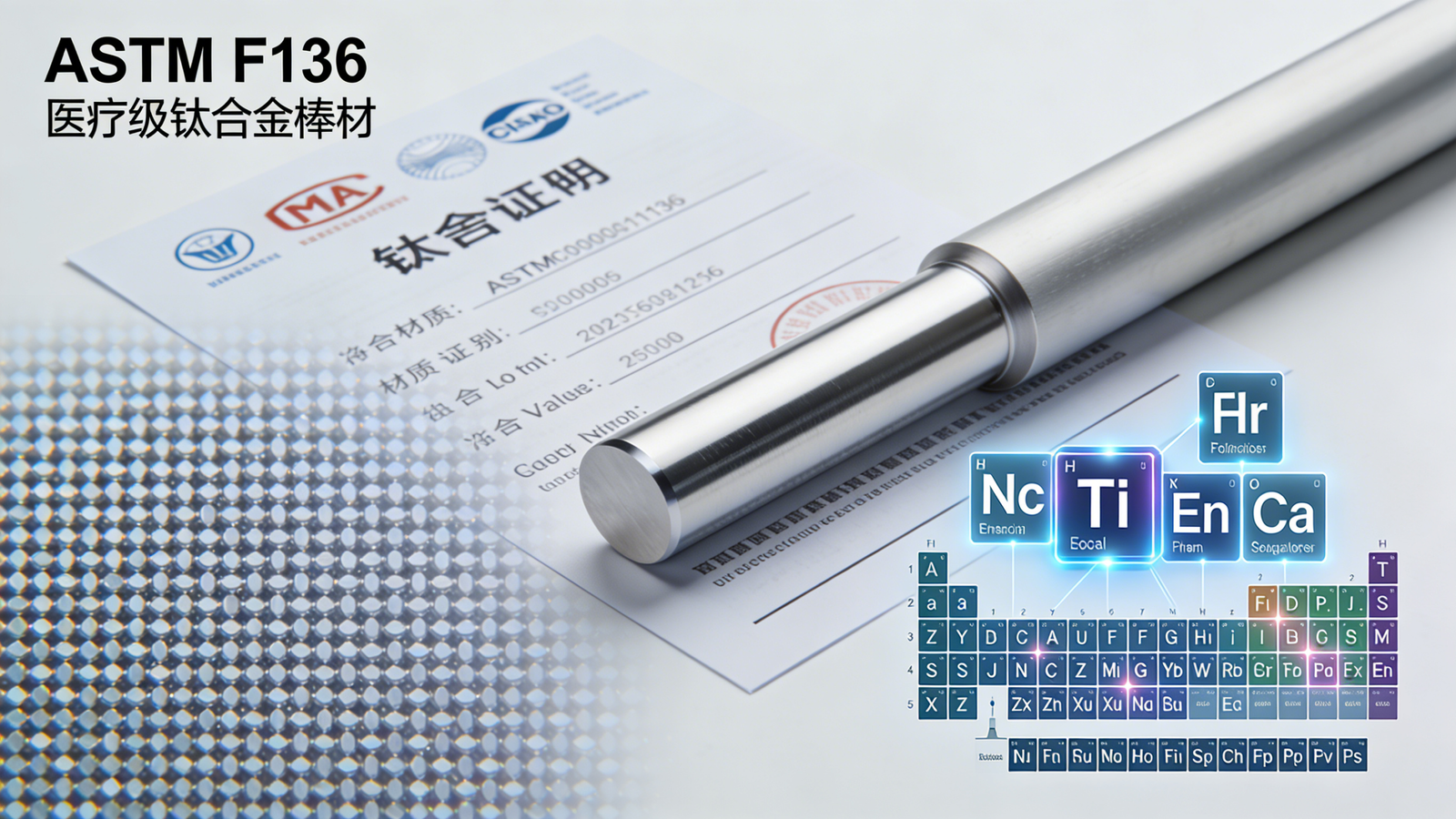
Titanium CNC machining for orthopedic implants requires compliance across materials, biocompatibility, manufacturing systems, and risk management rather than reliance on a single standard. True compliance is achieved only when safety requirements are embedded into every stage, from raw material sourcing to final release. Internationally recognized frameworks such as ISO 13485 for medical device quality management and ASTM F136 for medical-grade titanium alloys form the foundation, while regulatory expectations like those from the FDA medical device regulations reinforce traceability and accountability.
Material compliance: Medical-grade titanium must have documented chemical composition and mechanical properties aligned with ASTM requirements.
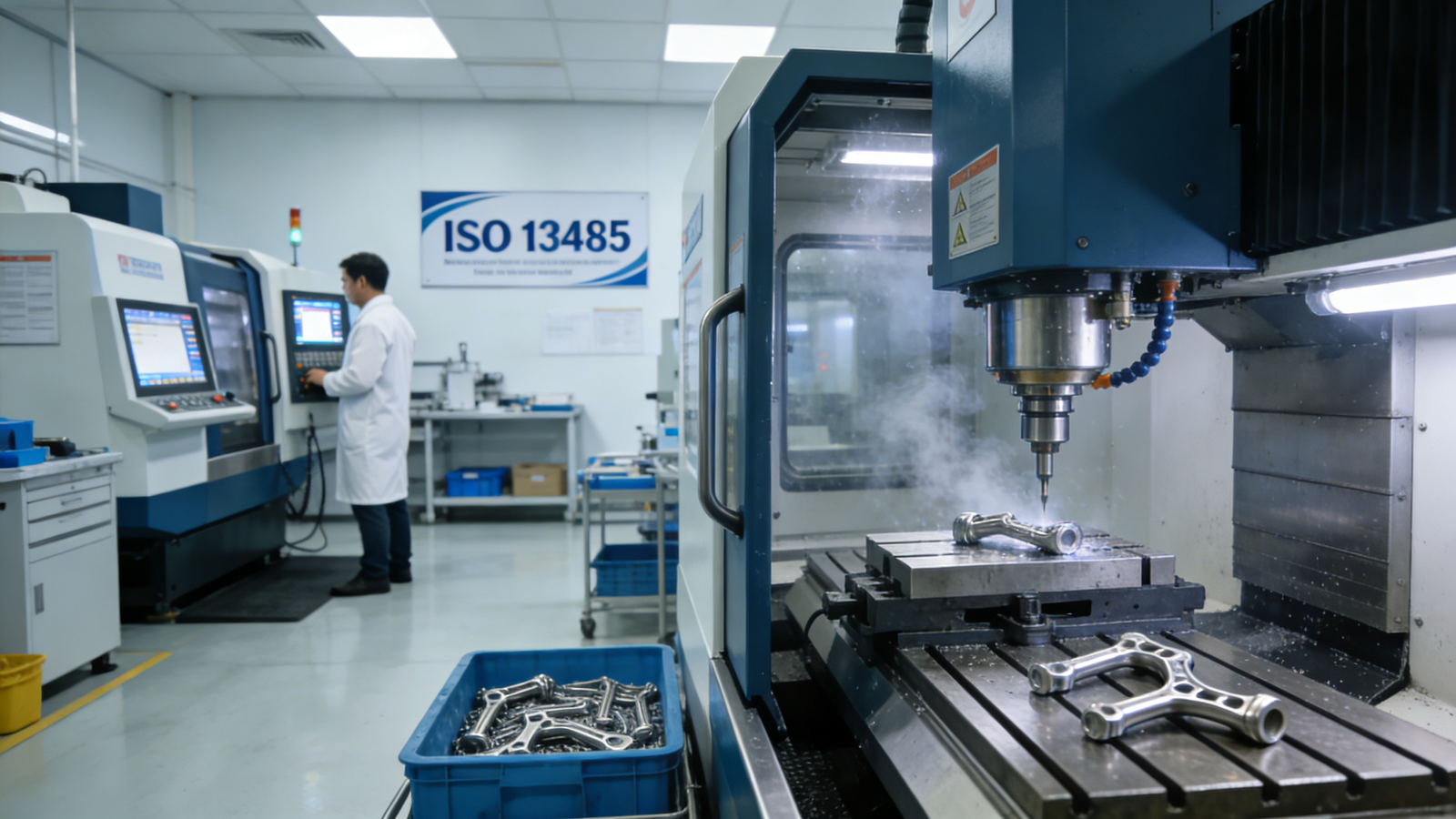
System compliance: CNC machining suppliers must operate under an ISO 13485-certified quality system to ensure controlled and repeatable processes.
Process compliance: Machining, cleaning, and packaging must be executed in controlled environments to prevent contamination.
Verification compliance: Dimensional accuracy, surface condition, and batch consistency must be verified before delivery.
🦴 Establishing compliance at the standard level defines the baseline for safe orthopedic implant manufacturing.
Which Risks Are Most Commonly Underestimated During Titanium CNC Machining?
In practice, many orthopedic device projects meet regulatory expectations at the design stage but encounter issues during actual manufacturing. These risks usually stem not from lack of technology, but from incomplete process discipline. For example, uncontrolled tool wear may introduce micro-cracks, while inadequate cleaning can leave residues that compromise sterilization. Such factors are explicitly addressed under the ISO 14971 medical device risk management framework and directly affect outcomes of biocompatibility testing.
Microstructural defects: Passing dimensional inspection does not guarantee internal structural integrity.
Surface contamination: Residual cutting fluids or metal particles may affect biocompatibility and sterilization.
Batch variability: Process inconsistency between prototype and mass production phases is frequently overlooked.
Documentation gaps: Missing machining and inspection records can delay or block regulatory submissions.
⚠️ The most critical risks are often hidden behind components that appear visually acceptable.
How Can a Compliant Machining System Reduce Procurement Risk?
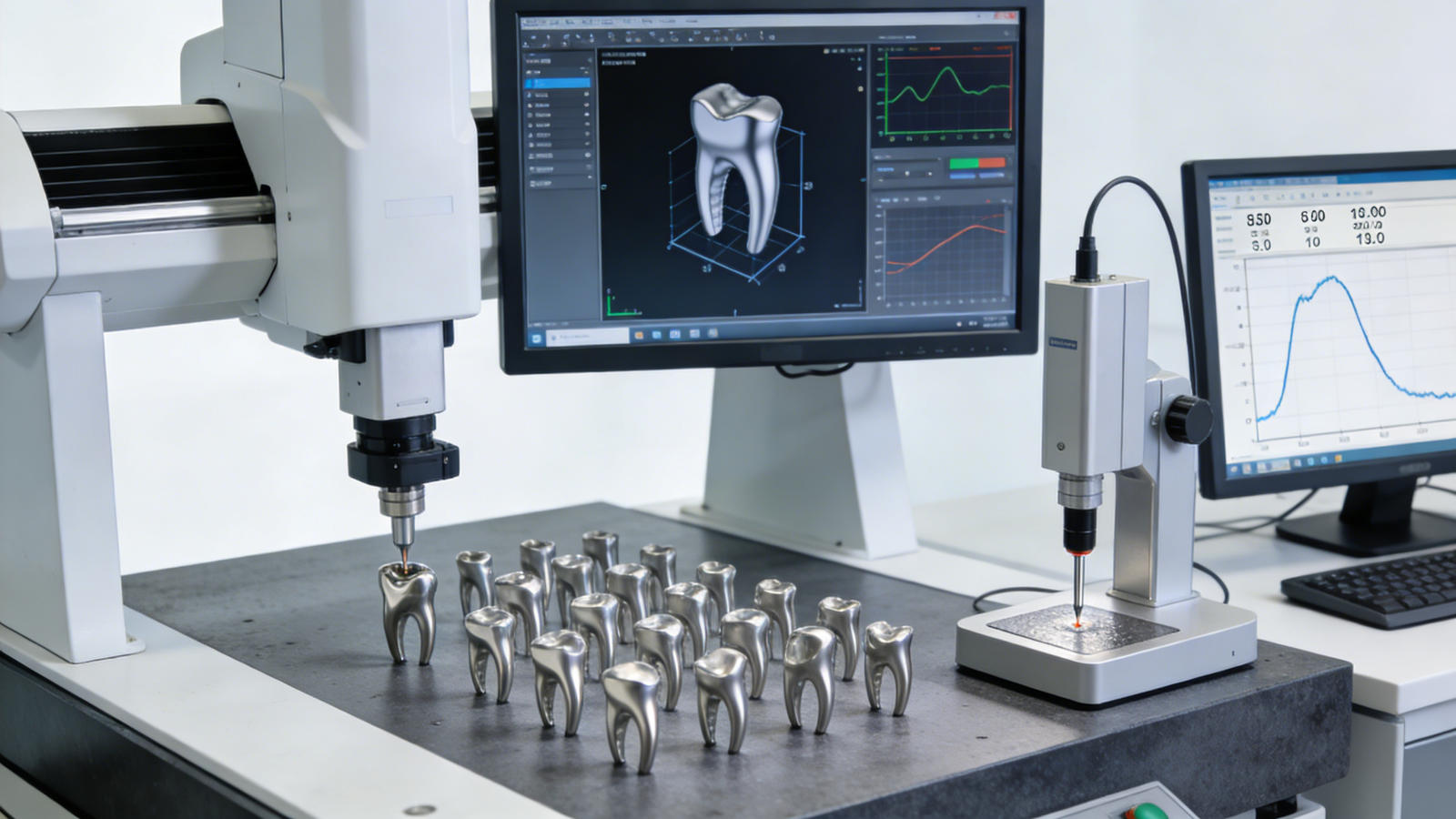
From a procurement standpoint, selecting a titanium CNC machining partner means selecting a long-term compliance system rather than a one-time service. Xiamen Ruicheng integrates quality management, machining capability, and engineering expertise into a unified process to minimize regulatory uncertainty at the source. Our operations are aligned with ISO 13485 and relevant ASTM medical material standards, with risk evaluation embedded into every project review.
Early-stage review: Engineering teams assess drawings and clinical applications to identify risks before machining begins.
Process control: Critical machining steps are monitored through predefined quality checkpoints.
Data retention: Complete machining and inspection records are maintained to support audits and registrations.
Continuous improvement: Post-project reviews refine parameters and validation methods for future programs.
✅ A robust compliance system serves as the most effective buffer against procurement risk.
Key Safety Standards Comparison for Orthopedic Implant Titanium CNC Machining
| Dimension | Standard | Primary Focus | Procurement Value |
|---|---|---|---|
| Material | ASTM F136 | Chemical & mechanical properties | Ensures implant safety |
| Quality System | ISO 13485 | End-to-end quality control | Reduces compliance risk |
| Risk | ISO 14971 | Hazard identification & mitigation | Supports regulatory approval |
| Regulation | FDA QSR | Traceability & audits | Enables market access |
Interested in assessing whether your project meets implant-grade machining requirements? Feel free to contact us
From Standards Compliance to Reliable Delivery
Orthopedic implant projects typically involve long development cycles and complex validations. Understanding standards alone is not enough; execution capability is the decisive factor. At Xiamen Ruicheng, we focus on translating abstract regulatory requirements into repeatable machining actions. Through multi-axis CNC equipment, dedicated fixtures, and controlled cleaning processes, we support consistent safety performance from prototyping to mass production.
1.Process stabilization: Validated parameters are standardized to minimize variability.
2.Batch control: Each batch is independently identified to ensure traceability.
3.Cross-functional collaboration: Quality, engineering, and production teams work in parallel.
4.Customer co-review: Key milestones are reviewed jointly to prevent information gaps.
Frequently Asked Questions (FAQ)
Question: What is the core safety advantage of your custom titanium CNC machining for orthopedic implants?
Answer: Our operations are built on ISO 13485-compliant systems combined with ASTM F136 medical-grade titanium sourcing, ensuring full traceability from material intake to final inspection.
Question: What information should first-time customers provide to start an orthopedic implant project?
Answer: We recommend submitting detailed drawings, intended application, target batch volumes, and destination markets so we can assess machining feasibility and compliance risks early.
Question: How do lead time and cost differ between prototyping and mass production?
Answer: Prototype stages prioritize validation flexibility, while mass production leverages stabilized processes to balance cost efficiency and delivery reliability.
Question: How are quality or compliance issues handled after delivery?
Answer: We follow a defined issue assessment protocol and can initiate corrective actions or remanufacturing promptly, supported by documented root cause analysis.
Question: Can you support customized machining for special clinical requirements?
Answer: Yes, we support application-specific customization, subject to feasibility assessment, validation scope, and potential impact on cost and lead time.
Conclusion
Safety standards in titanium CNC machining for orthopedic implants determine whether a product can successfully enter clinical use and regulated markets. Reliable manufacturing partnerships are built not merely on claims of compliance, but on the ability to deliver consistent, verifiable safety outcomes. Xiamen Ruicheng supports customers by reducing uncertainty throughout the decision-making process and enabling long-term, compliant collaboration.
For expert assistance in implementing for your production needs, visit our resource center or contact us. Let’s help you scale up your manufacturing with precision and efficiency!
Email: marketing@chinaruicheng.com
WhatsApp: +8615980769781
Contact page: https://custommetalpro.com/contact-us/