Finding the right custom metal parts manufacturer1 can feel overwhelming. I’ve been in your shoes. The wrong choice means delays, cost overruns, and production headaches. But the right partner? It’s like finding gold. Let me share what I’ve learned from over a decade in this industry to make your search easier.
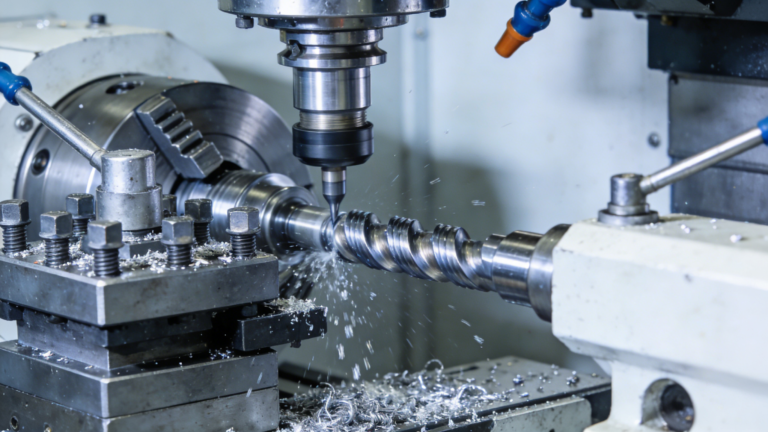
Choosing a custom metal parts manufacturer is about more than just price. You need a partner who understands your technical needs and production timeline. Look for proven experience with your specific manufacturing process2—stamping, die casting3, CNC machining4, or sheet metal fabrication5. They should offer material certifications6, tight tolerance control (±0.01mm), and scalability from prototyping to mass production. Most importantly, they must become an extension of your team, ensuring quality parts arrive on time, every time.
The right manufacturer solves problems before they happen. Let’s explore what truly matters.
Which manufacturing processes are available?
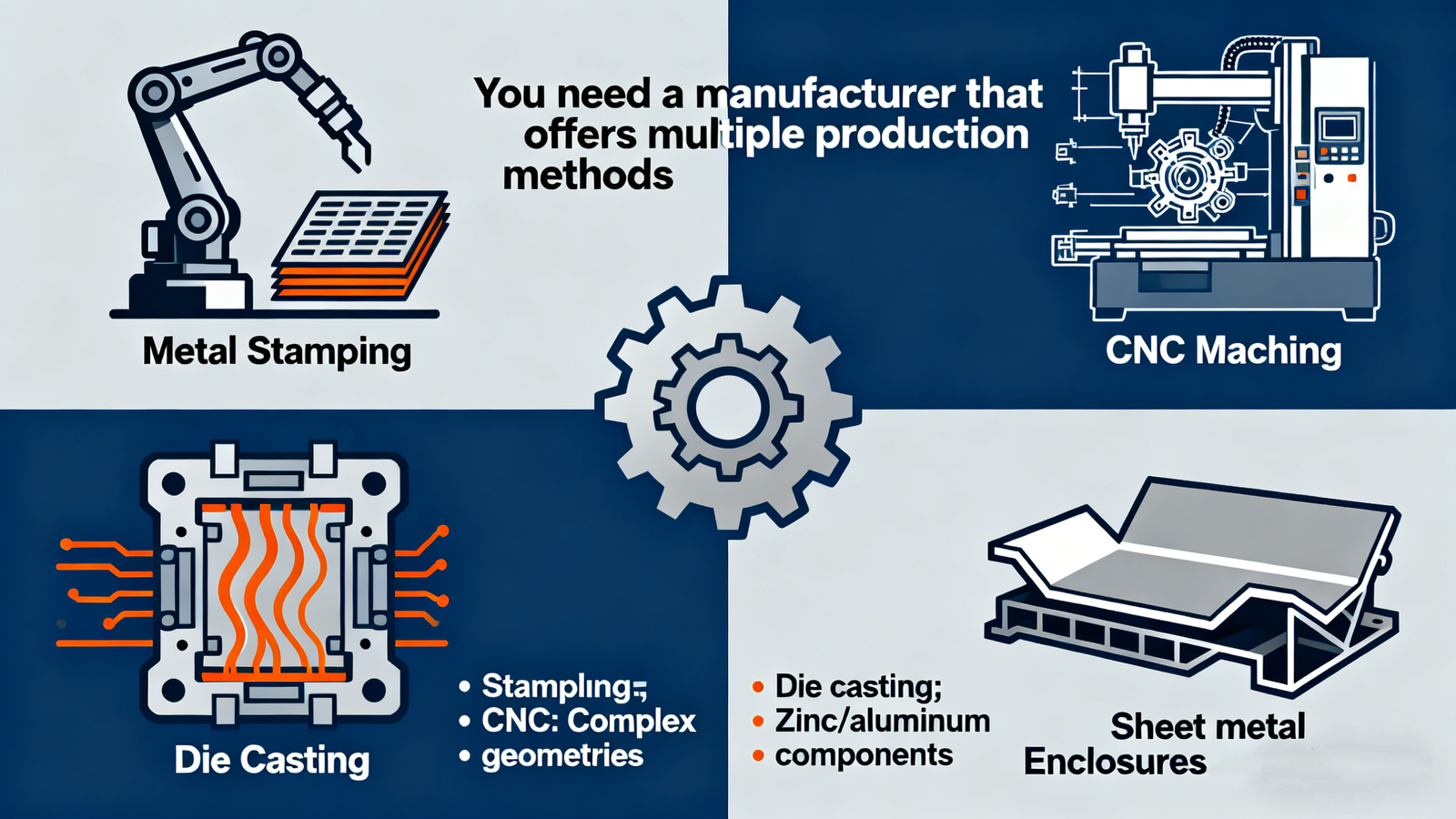
You need a manufacturer that offers multiple production methods. This ensures you get the best process for your specific part.
Look for suppliers with comprehensive capabilities including metal stamping7, CNC machining, die casting, and sheet metal fabrication. Each process serves different needs: stamping for high volumes, CNC for complex parts, die casting for metal housings, and sheet metal for enclosures. The right partner helps you choose the optimal method.
Metal stamping works best for high-volume production
CNC machining handles complex geometries and tight tolerances
Die casting is ideal for zinc and aluminum components
Sheet metal fabrication suits enclosures and structural parts
What equipment should they have?
The right equipment makes all the difference in quality and efficiency. Modern machines deliver better results.
A qualified manufacturer invests in modern equipment. Look for stamping presses from 25 to 500 tons, multi-axis CNC machines, die casting machines, and laser cutting systems. Advanced equipment ensures consistent quality and faster production times.
Stamping presses ranging from 25 to 500 tons
5-axis CNC machines for complex parts
Die casting machines for zinc and aluminum
Laser cutting and bending machines for sheet metal
| Equipment Type | Key Features | Applications |
|---|---|---|
| Stamping Presses | 25-500 ton capacity | Brackets, contacts, shields |
| CNC Machines | 3-axis to 5-axis | Precision prototypes, engine parts |
| Die Casting | Hot and cold chamber | Housings, connectors, components |
| Sheet Metal | Laser cutting, bending | Enclosures, chassis, panels |
How do they handle quality control8?
Quality cannot be compromised. Your manufacturer must have robust systems to ensure part consistency.
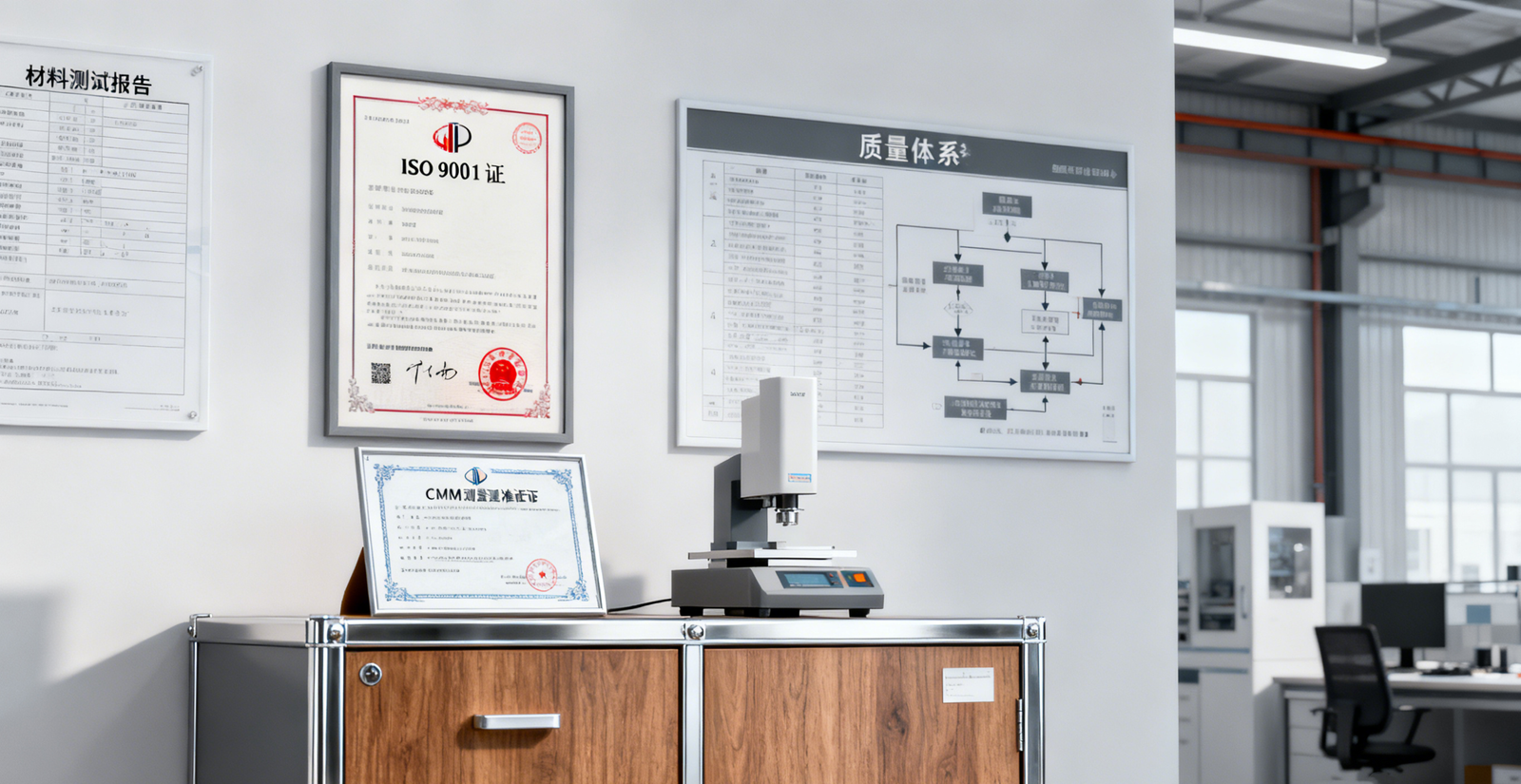
Demand ISO 9001 certification9 and in-house inspection equipment. The manufacturer should provide material certifications, first article reports, and regular inspection updates. Proper documentation proves their commitment to quality.
ISO 9001 certified quality systems
In-house CMM machines and measuring equipment
Material traceability and certifications
First Article Inspection Reports for every project
Can they support prototype to production10?
The transition from prototype to mass production is critical. Many suppliers struggle with this phase.
Your manufacturer must excel at both prototyping and volume production. They should offer fast prototyping with the same quality standards used in mass production. Seamless transition ensures no quality loss when scaling up.
Rapid prototyping with quick turnaround times
Same quality standards for prototypes and production
Smooth transition processes
Volume production capabilities
What about project management11?
Good communication keeps projects on track. You need clear updates and quick responses.
Choose a manufacturer with dedicated project management. They should provide regular progress reports, quick response times, and proactive issue resolution. Good communication prevents surprises and delays.
Dedicated project manager for each client
Weekly progress reports with photos
24-hour response time guarantee
Proactive problem solving
How important are certifications?
Certifications prove a manufacturer meets industry standards. They’re not just paperwork – they’re promises.
Look for ISO 9001 quality certification and material compliance certificates. Industry-specific certifications like automotive or medical standards show deeper expertise. Certifications provide assurance of professional processes.
ISO 9001 quality management certification
Material compliance certificates
Industry-specific standards knowledge
Regular audit compliance
Nothing speaks louder than actual results. Let me share how we helped a medical device company.
We recently partnered with a European medical device manufacturer needing aluminum housings. The project required ±0.05mm tolerances and medical-grade surface finishes. From prototype to 10,000 units monthly, we delivered consistent quality with zero defects.
The client needed complex aluminum enclosures
Tight tolerances of ±0.05mm required
Medical-grade surface finish specifications
Monthly volume of 10,000 units
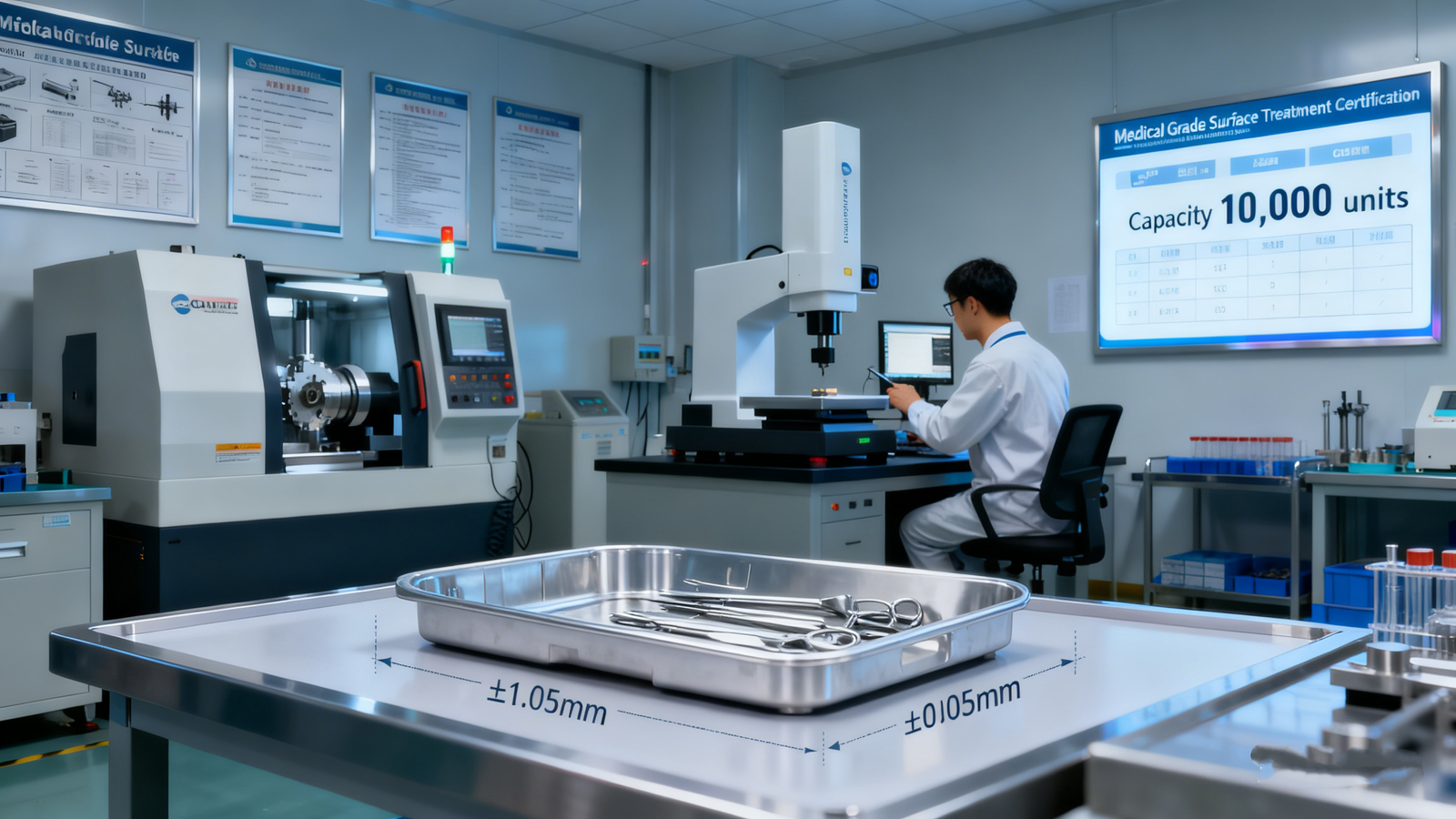
The challenge was maintaining perfect surface finish while holding tight tolerances across high volumes. Our solution involved custom die casting tools with precision polishing. We implemented 100% inspection using custom fixtures. The result? Zero defect delivery for 12 consecutive months. The client reduced their quality inspection time by 70% because they trusted our processes. This is the kind of partnership we build with every client.
Conclusion
Choosing the right manufacturing partner requires careful consideration of capabilities, quality systems, and communication. We’ve built Ruicheng to meet these exacting standards, ready to become your trusted partner.
Email: marketing@chinaruicheng.com
WhatsApp: +8615980769781
Contact us: https://custommetalpro.com/contact-us/
-
Explore this link to understand the key factors in selecting a reliable custom metal parts manufacturer. ↩
-
Learn about various manufacturing processes to choose the best one for your project needs. ↩
-
Understand the advantages of die casting for producing metal components. ↩
-
Find out how CNC machining can handle complex geometries and improve precision. ↩
-
Explore the applications of sheet metal fabrication in various industries. ↩
-
Learn about the significance of material certifications in ensuring product quality. ↩
-
Discover the benefits and applications of metal stamping in high-volume production. ↩
-
Learn about the importance of quality control systems in manufacturing. ↩
-
Discover why ISO 9001 certification is crucial for quality assurance in manufacturing. ↩
-
Understand the challenges and solutions in transitioning from prototypes to mass production. ↩
-
Explore how effective project management can enhance communication and efficiency. ↩