Introduction
Special tungsten materials are widely used in high-end equipment, radiation shielding, medical protection, and precision counterweight applications due to their extremely high density, high melting point, and excellent stability. In real-world applications, high density is not just a material property but a core value that must be fully preserved during machining.
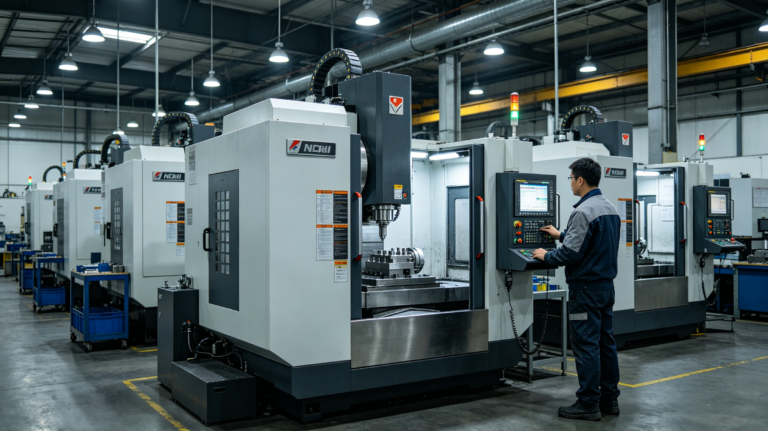
From Xiamen Ruicheng’s long-term experience in metal machining, the true challenge of tungsten processing is not whether it can be machined, but whether its intrinsic density can remain intact throughout custom CNC manufacturing. Only through systematic process control can theoretical density be transformed into reliable functional performance.
How can CNC machining preserve the true high density of tungsten materials?
During CNC machining, special tungsten materials are prone to microcracks or internal looseness caused by cutting heat, residual stress, or improper tooling, which directly affects final density performance. Xiamen Ruicheng ensures that the theoretical density of tungsten is maximally retained in finished parts through coordinated material selection and machining strategies. By aligning the physical characteristics of tungsten with appropriate CNC machining parameters, density loss risks can be effectively controlled.
Material pre-treatment: Vacuum sintering and stress-relief processes are applied to enhance internal structural uniformity.
Cutting strategy: Low feed rates with multi-pass toolpaths are used to reduce localized thermal concentration.
Tool selection: Specialized carbide or PCD tools minimize compressive damage to dense microstructures.
Process monitoring: Real-time vibration and temperature monitoring prevents microcrack formation during machining.
🔧 High density is not corrected after machining; it is protected from the very first cut.
How can density integrity be verified in custom tungsten components?
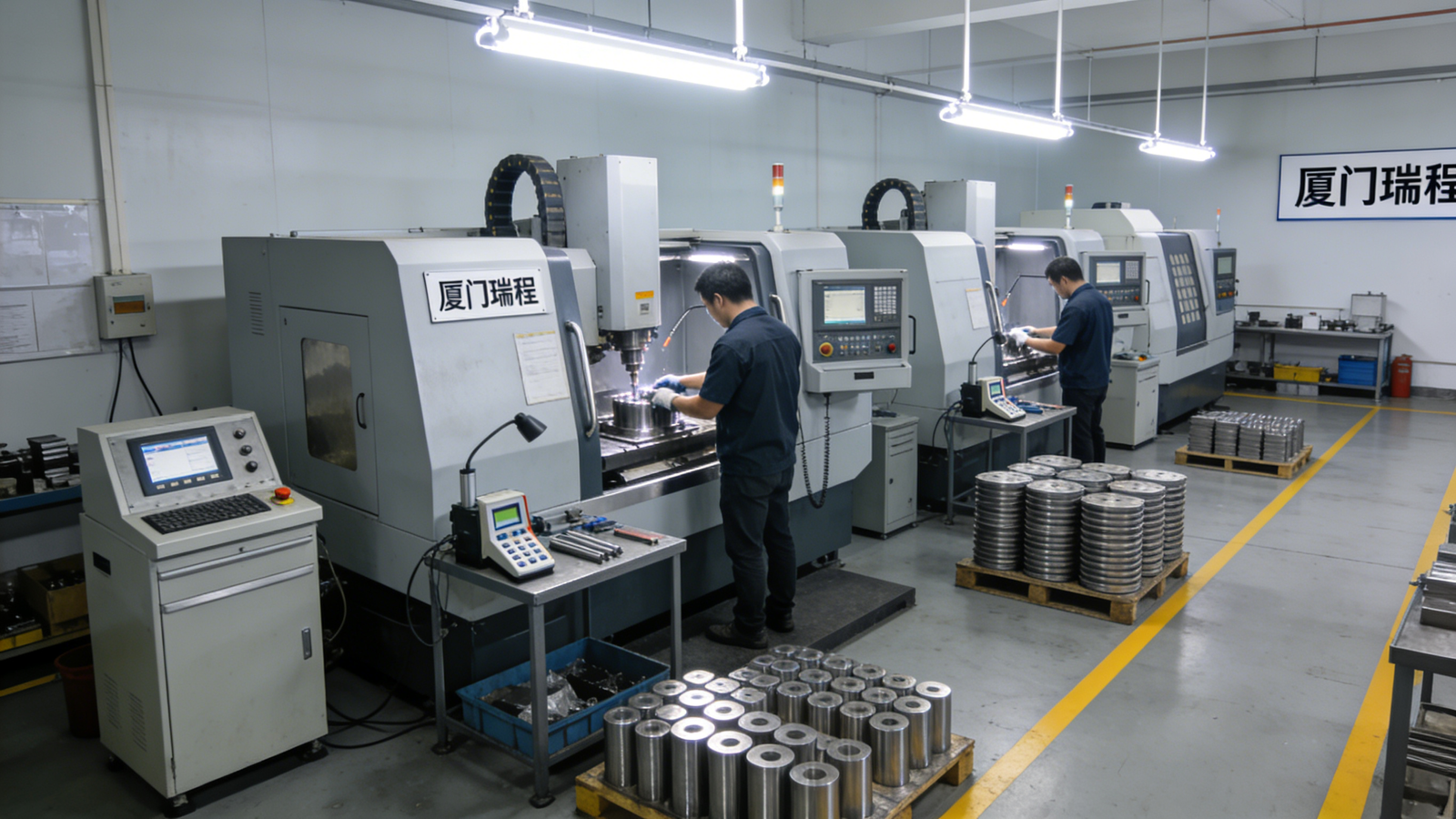
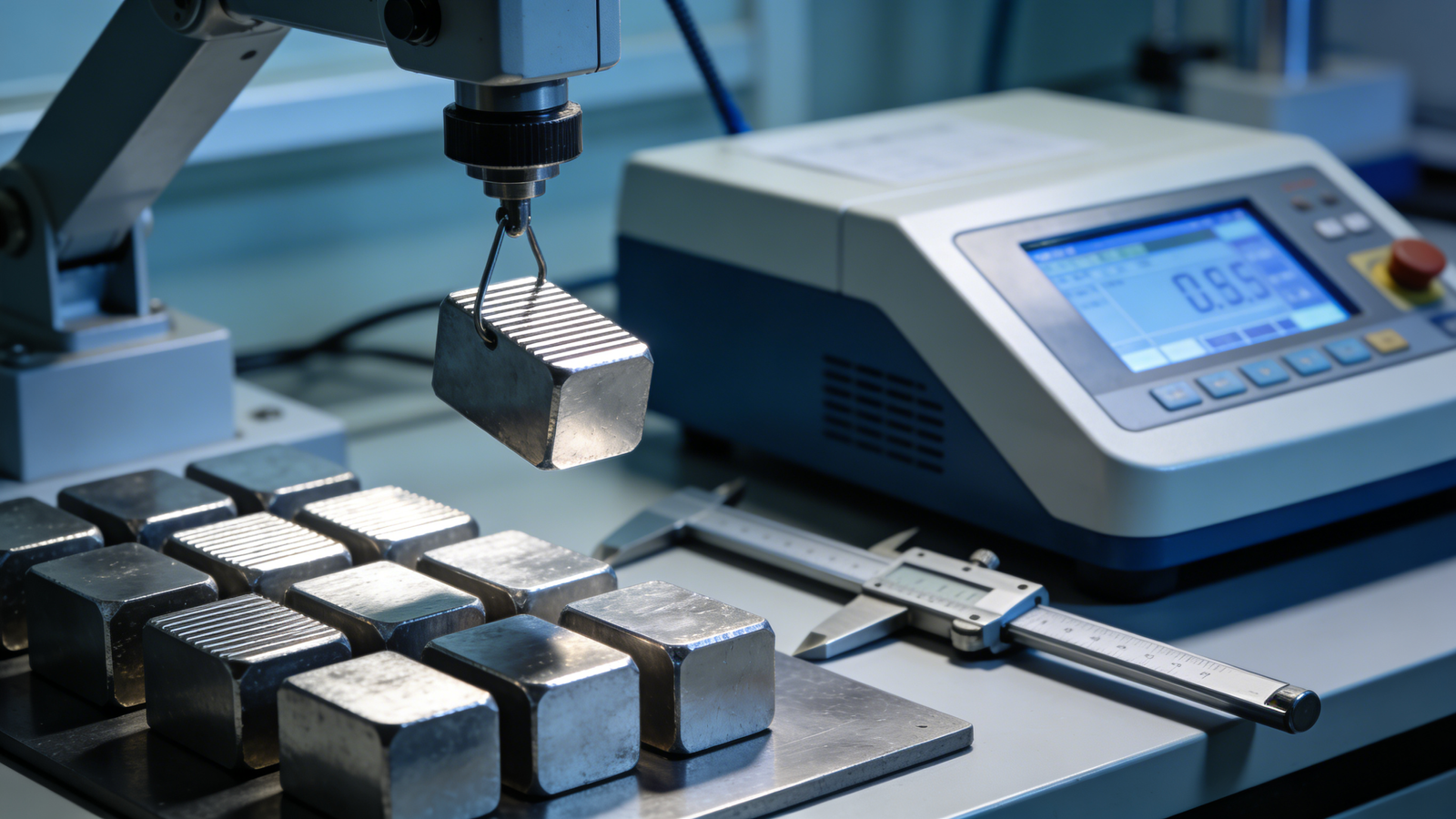
High-density tungsten components are often used in critical positions, where density must be verifiable rather than assumed. Xiamen Ruicheng integrates multiple inspection methods into the customization workflow, converting density requirements into measurable and traceable results. By combining non-destructive testing with density measurement, every part is validated against application standards.
X-ray inspection: Detects internal pores or inclusions to confirm overall compactness.
Archimedes method: Measures actual part density and compares it with theoretical values.
In-process sampling: Intermediate inspections prevent defect amplification at later stages.
Data traceability: Complete inspection records are provided to support quality audits.
📊 True high density withstands both inspection and long-term performance validation.
How do high-density requirements impact machining cost and delivery?
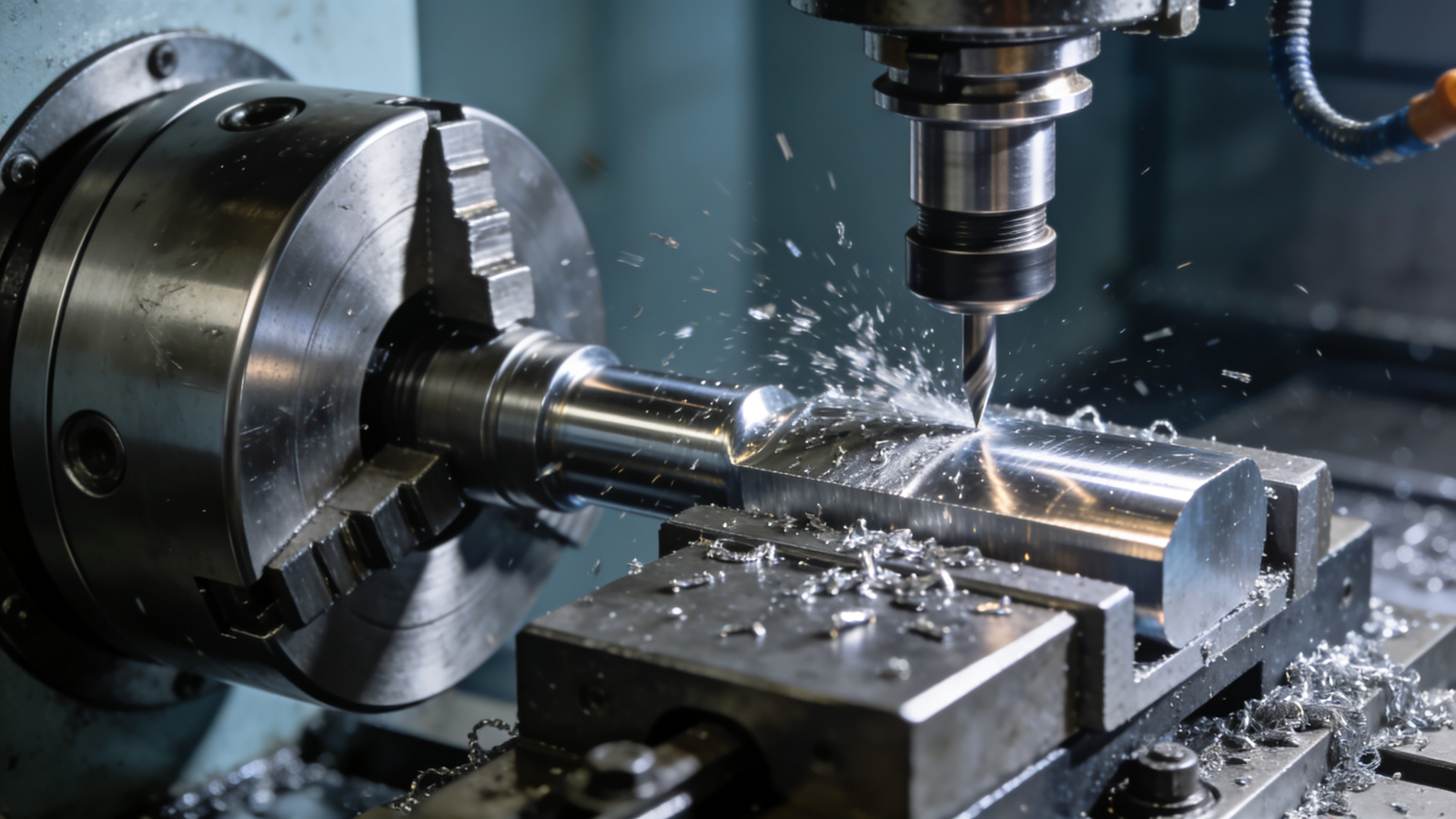
High density does not inherently mean uncontrolled cost; instead, it raises requirements for process coordination. Xiamen Ruicheng controls cost and lead time by shifting risk identification to earlier stages while maintaining density performance. Through the synergy of precision machining and custom manufacturing, high-density demands become manageable.
Early feasibility assessment: Density risks are identified during quotation to avoid rework.
Batch planning: Small-lot and volume production are balanced to optimize unit cost.
Equipment matching: High-rigidity CNC machines reduce repeated machining cycles.
Lead-time management: Parallel process design shortens overall delivery schedules.
⏱️ High density is not a delivery obstacle—it is a benchmark of manufacturing capability.
Comparison of tungsten machining solutions and density retention performance
| Comparison Factor | Conventional Machining | Optimized CNC Machining | High-Density Custom Scheme | Xiamen Ruicheng Solution |
|---|---|---|---|---|
| Internal compactness | Unstable | Moderately stable | High | High & verifiable |
| Crack risk | High | Medium | Low | Extremely low |
| Density consistency | Large variation | Controllable | Stable | Stable & traceable |
| Delivery reliability | Average | Good | High | High |
If you are evaluating machining strategies for high-density tungsten components, contact us
Viewing high-density tungsten CNC customization as decision support
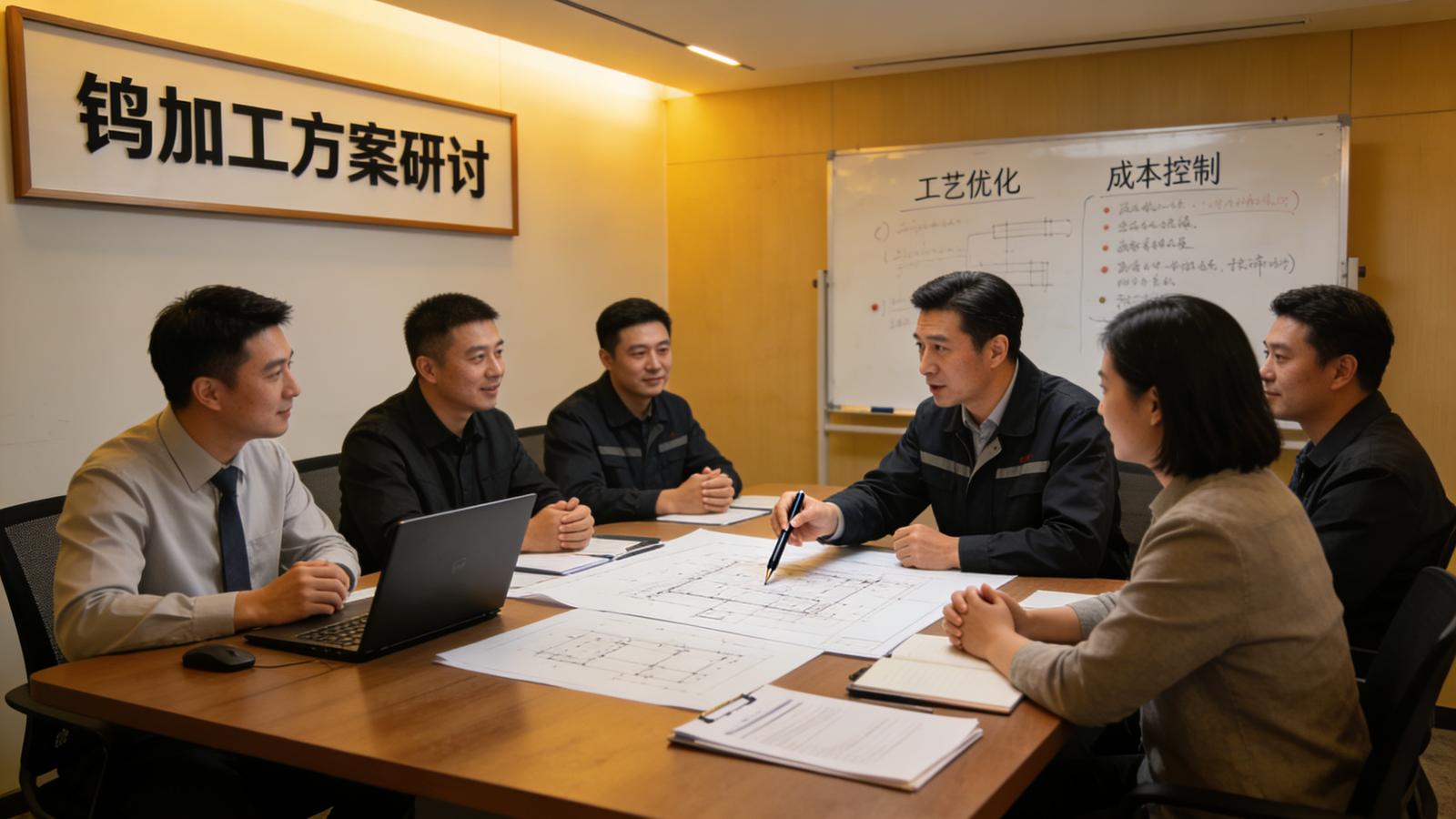
High-density tungsten procurement is not a one-time decision but a continuous process covering selection, validation, and scaling. Xiamen Ruicheng focuses on addressing client concerns at each decision stage rather than merely delivering finished parts. Through early technical consultation and mid-stage sample validation, clients gain confidence before full-scale production.
1.Requirement clarification: Define how density contributes to functional performance.
2.Solution co-development: Align machining and inspection routes with use scenarios.
3.Sample validation: Reduce decision risk through physical and data-backed verification.
4.Production support: Ensure batch-to-batch density and performance consistency.
FAQ – Procurement-Oriented Questions
Question 1: What is the quality baseline for your custom CNC machining of special tungsten materials?
Answer: Xiamen Ruicheng sets density integrity and machining stability as its core quality baseline. Clear density deviation limits are defined according to application needs, supported by in-process and final inspections to ensure immediate usability upon delivery.
Question 2: What information is required to initiate a quotation for custom tungsten CNC machining?
Answer: We recommend providing part drawings, target density requirements, operating conditions, and expected quantities. Based on this information, Xiamen Ruicheng delivers a feasibility assessment and a process-informed quotation.
Question 3: How are lead times managed for different order volumes?
Answer: Sample runs, small batches, and volume production are supported by flexible production scheduling, ensuring reliable delivery while maintaining density requirements.
Question 4: How are density deviations handled if they occur?
Answer: Density results are evaluated based on inspection data. If deviations are confirmed, Xiamen Ruicheng initiates corrective actions such as re-machining or remanufacturing, accompanied by process reviews to prevent recurrence.
Question 5: Do you support customization for special operating conditions?
Answer: Yes. For shielding, inertial, or protective applications, Xiamen Ruicheng can optimize material selection and machining pathways to meet specialized high-density performance demands.
Conclusion
The true value of high-density special tungsten materials can only be realized through a disciplined CNC customization system. By integrating material control, machining strategy, and inspection verification, Xiamen Ruicheng transforms density from a theoretical figure into a dependable manufacturing capability. For clients seeking long-term reliability, partnering with a supplier that offers decision-stage support is more valuable than focusing solely on unit pricing.
For expert assistance in implementing solutions for your production needs, visit our resource center or contact us. Let’s help you scale up your manufacturing with precision and efficiency!