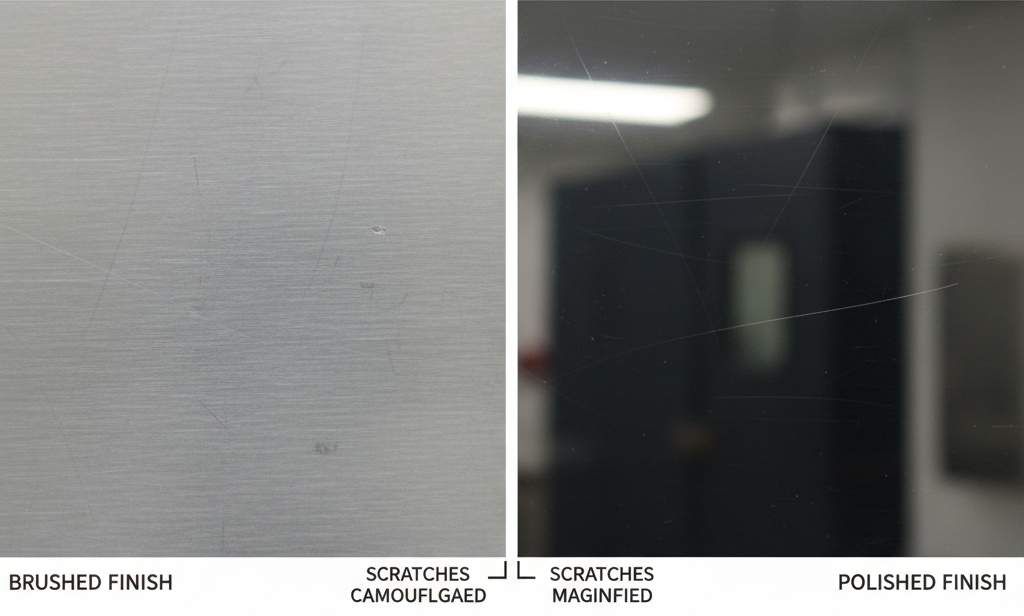
Brushed finishes1 absolutely hide scratches better than polished finishes because their directional grain pattern and light-diffusing surface texture effectively camouflage new scratches by blending them into the existing surface pattern, while polished surfaces magnify imperfections through their mirror-like reflectivity. Having processed thousands of metal components for applications ranging from consumer electronics to architectural features, we’ve consistently observed that brushed surfaces maintain their appearance longer in high-traffic environments where scratching is inevitable.
The science behind this advantage lies in surface light interaction: brushed finishes scatter light in specific directions, making scratches less noticeable, while polished finishes reflect light uniformly, turning every minor scratch into a visible light-distortion line that draws attention to the imperfection. This fundamental difference in light behavior explains why brushed finishes are preferred for practical applications where maintenance and durability matter more than maximum reflectivity.
How does surface topography affect scratch visibility?
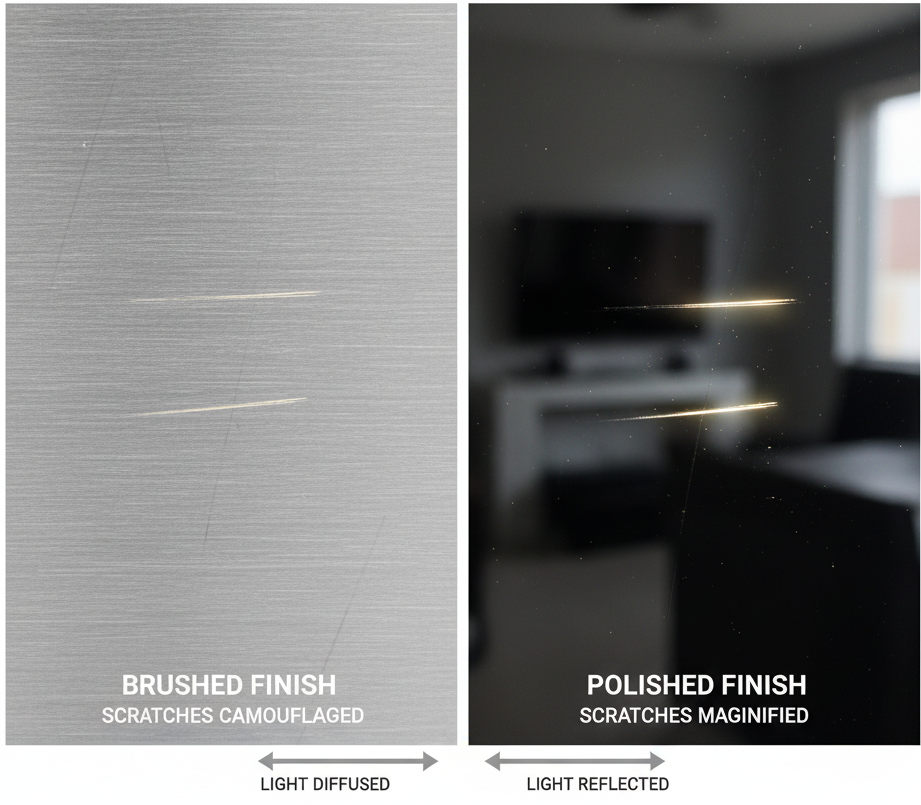
Brushed finishes feature controlled, directional scratches at a microscopic level that create a uniform pattern, allowing new random scratches to blend into the existing texture, while polished surfaces have no such "camouflage" pattern, making every new scratch stand out as a disruption to the perfect mirror finish. The pre-existing texture of brushed metal provides visual cover that polished surfaces cannot offer.
Key topographic differences:
- Brushed finish: Directional grooves (0.1-0.5μm depth) that scatter light
- Polished finish: Mirror-smooth surface (Ra < 0.025μm) that reflects light directly
- Scratch blending: New scratches follow or cross existing grain patterns
- Light interaction: Brushed surfaces diffuse, polished surfaces reflect
This topographic advantage means that a scratch that would be glaringly obvious on a polished surface often becomes virtually invisible on a brushed surface of the same material.
What are the practical implications for different applications?
The scratch-hiding advantage of brushed finishes makes them ideal for high-traffic applications like elevator interiors, kitchen appliances, and consumer electronics, while polished finishes remain preferable for decorative elements where maximum reflectivity is valued over practical durability. Choosing between them involves trading off aesthetics against maintenance requirements.
| Application | Recommended Finish | Reason | Scratch Performance |
|---|---|---|---|
| Elevator Interiors | Brushed | Hides daily wear | Excellent |
| Kitchen Appliances | Brushed | Resists utensil marks | Very Good |
| Decorative Trim | Polished | Maximum reflectivity | Poor |
| Medical Equipment | Brushed | Easy to maintain | Excellent |
| Jewelry | Polished | High-end appearance | Poor |
In practical terms, brushed finishes can maintain their appearance 3-5 times longer than polished finishes in environments where scratching is likely, significantly reducing maintenance costs and customer complaints.
How does material hardness interact with finish type?
While finish type significantly affects scratch visibility, material hardness determines scratch susceptibility, with harder materials like stainless steel benefiting more from brushed finishes’ hiding capabilities than softer materials like aluminum where deep scratches may still be visible despite the surface texture. The combination of material selection and finish type creates the optimal solution.
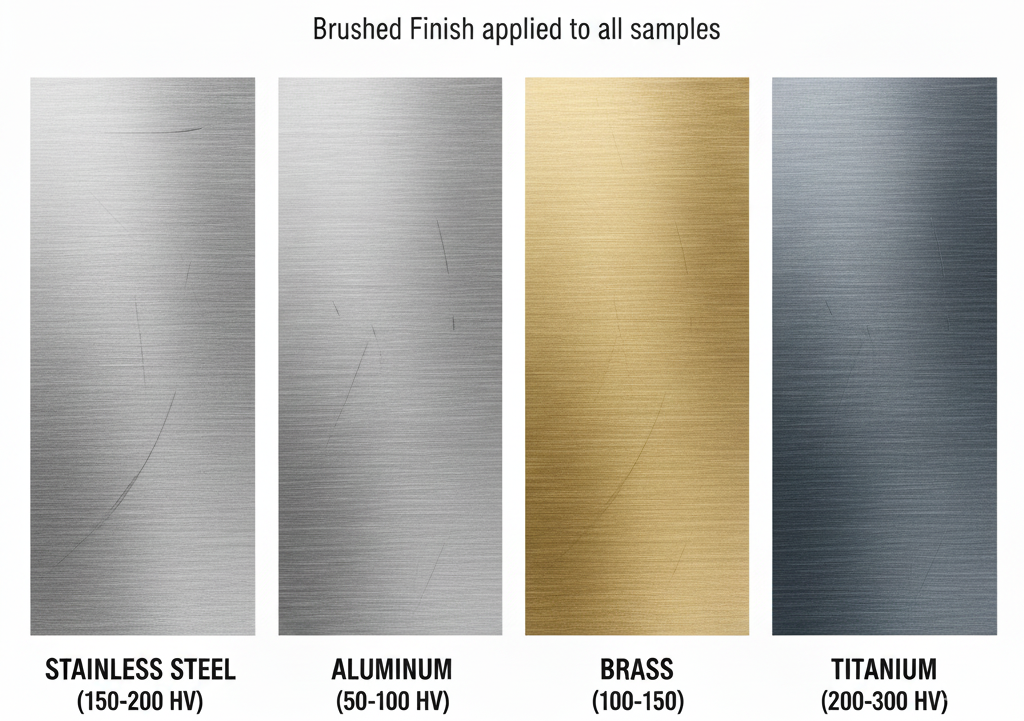
Material-specific considerations:
- Stainless steel (150-200 HV): Brushed finish highly effective
- Aluminum (50-100 HV): Brushed helps but deep scratches may show
- Brass (100-150 HV): Brushed provides good scratch hiding
- Titanium (200-300 HV): Brushed finish extremely effective
Harder materials not only resist scratching better but also allow brushed finishes to work more effectively, as scratches tend to be shallower and more easily camouflaged.
Can brushed finishes be repaired more easily?
Brushed finishes offer significantly easier repair options than polished surfaces, as localized brushing can often blend scratches without requiring complete refinishing, while polished surfaces typically need complete repolishing to restore their mirror finish after damage. This maintenance advantage further enhances brushed finishes’ practical appeal.
Repair comparison:
- Brushed finish: Spot repair possible with abrasive pads or brushes
- Polished finish: Typically requires complete surface repolishing
- Time requirement: Brushed repair takes 25-50% of polished repair time
- Skill level: Brushed repairs more forgiving for maintenance staff
- Equipment needs: Basic tools vs. professional polishing equipment
This repairability advantage means that when brushed surfaces do eventually show wear, they can often be restored to like-new condition with minimal effort and cost.
What about other finish options for scratch resistance?
Beyond brushed and polished finishes, powder coating and anodizing provide alternative approaches to scratch resistance, with thick polymer coatings offering the best protection but changing the material’s fundamental appearance and tactile qualities. These options represent different trade-offs in the scratch resistance battle.
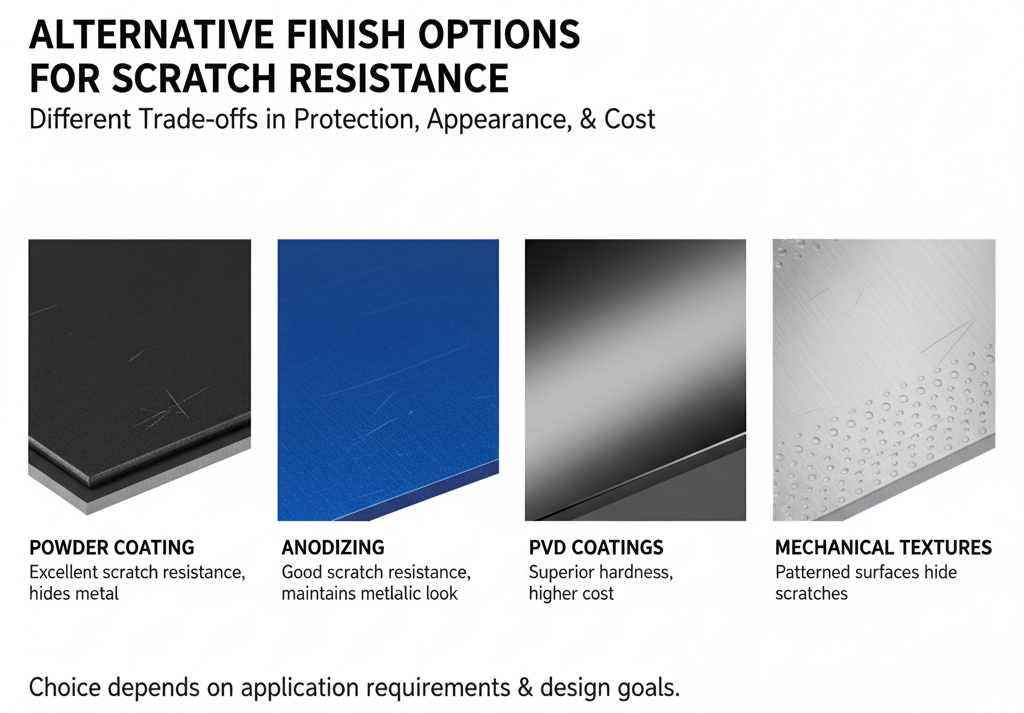
Alternative scratch-resistant options:
- Powder coating2: Excellent scratch resistance but hides metal appearance
- Anodizing3: Good scratch resistance while maintaining metallic look
- PVD coatings4: Superior hardness but higher cost
- Mechanical textures5: Patterned surfaces that hide scratches effectively
Each alternative offers different combinations of protection, appearance, and cost, making the choice dependent on specific application requirements and design goals.
How to choose between brushed and polished for your project?
The choice between brushed and polished finishes ultimately depends on your priority: choose brushed for practical durability and scratch resistance in high-use applications, or select polished for maximum visual impact in low-wear environments where maintenance is less concerning. Understanding your usage patterns and maintenance capabilities guides the optimal selection.
Decision framework:
- High traffic + limited maintenance = Brushed finish
- Decorative + minimal contact = Polished finish
- Budget-conscious + durable = Brushed finish
- Premium appearance + careful handling = Polished finish
- Easy repair important = Brushed finish
We recommend brushed finishes for approximately 70% of practical applications where longevity and maintenance considerations outweigh pure reflectivity requirements.
Need help selecting the right finish?
Our finish selection service combines practical experience with technical testing to recommend the optimal surface treatment for your specific application, ensuring the best balance of aesthetics, durability, and maintenance requirements. Contact us for a personalized finish recommendation based on your project needs.
Why customers trust our finish expertise:
- Real-world performance testing data
- Application-specific finish recommendations
- Complete in-house finishing capabilities
- Maintenance and repair guidance
- Quality assurance and consistency
Don’t let finish selection compromise your product’s appearance or durability – let us help you choose the perfect surface treatment for your specific needs and environment.
-
Explore the advantages of brushed finishes, including their superior scratch resistance and durability in high-traffic environments. ↩
-
Explore powder coating as an alternative finish and its advantages in scratch resistance and durability. ↩
-
Discover how anodizing can provide good scratch resistance while maintaining a metallic appearance. ↩
-
Learn about PVD coatings, their superior hardness, and how they compare to traditional finishes. ↩
-
Understand how mechanical textures can effectively camouflage scratches and enhance durability. ↩